

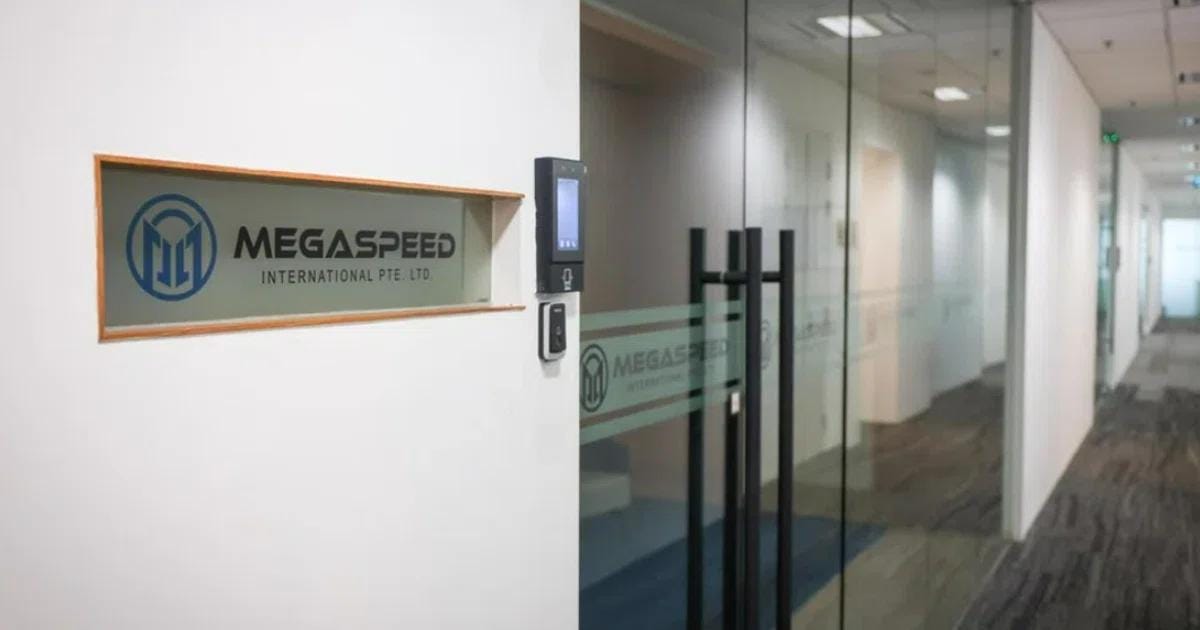
The Trump administration has officially confirmed a criminal investigation into Singapore-based technology company Megaspeed International over suspected violations of U.S. export controls involving advanced Nvidia semiconductors.
In a joint statement released Tuesday, November 17, the Department of Justice (DOJ) and Department of Commerce disclosed that the investigation began in 2024 after federal officials identified suspicious activity potentially involving the diversion of sensitive American semiconductor technology.
The announcement provides the clearest official account yet of the federal government’s investigation into Megaspeed, a company suspected of facilitating the transfer of restricted artificial intelligence (AI) chips to unauthorized buyers in China.
The investigation has attracted international attention because of its connections to Nvidia, the world’s leading AI chipmaker, and its former CEO, Jensen Huang, whose recent personal revelations have intensified scrutiny of the company’s relationship with Megaspeed.
Federal authorities emphasized that advanced semiconductors represent critical strategic assets for the United States and pledged to pursue potential criminal violations.
“The Department of Justice and the Department of Commerce’s Bureau of Industry and Security working together will bring the full extent of the law against Megaspeed for any criminal conduct that may have occurred,” the agencies said.
Federal investigation began in 2024
According to the government statement, the Commerce Department’s Bureau of Industry and Security (BIS) initiated its investigation in 2024 after identifying suspicious activity through monitoring systems designed to detect the potential diversion of sensitive semiconductor technology.
In May 2025, Commerce Department investigators requested records from Nvidia concerning direct and indirect sales to Megaspeed.
One month later, Nvidia placed Megaspeed on its internal “no sell” list, restricting further sales to the company.
In June 2025, Commerce Department investigators, working alongside Singaporean law enforcement officials, conducted an in-person inspection at Megaspeed’s facilities. Authorities also interviewed then-CEO Alice Huang as part of their examination of the company’s operations.
Following that enforcement action, the Justice Department assumed the leading role in the criminal investigation.
The agencies said their announcement was intended to address inaccurate information circulating publicly, although they acknowledged that government officials typically avoid commenting on ongoing criminal investigations.
Nvidia’s AI chips and concerns over China
At the center of the investigation are advanced Nvidia semiconductors used to power artificial intelligence systems, high-performance computing infrastructure and sophisticated data centers.
Washington has imposed restrictions on exports of its most advanced AI chips to China because of concerns that the technology could strengthen Beijing’s military capabilities and strategic technological development.
However, investigators and lawmakers have increasingly focused on whether overseas companies and data centers are providing Chinese customers with indirect access to restricted American technology.
Megaspeed has been suspected of playing a role in this potential diversion network.
The controversy has also raised questions about whether existing export-control mechanisms are sufficiently effective in preventing American technology from reaching restricted destinations through third-party companies and overseas infrastructure.
Sen. Michael Bennet (D-Colo.), a member of the Senate Intelligence Committee, has pressed the administration for answers about the investigation and called for stronger measures to prevent unauthorized access to American semiconductor technology.
In a November 11 letter to senior administration officials, Bennet warned that the diversion of advanced AI chips could create serious national security risks, including potential applications in autonomous weapons, cyberwarfare and surveillance systems.
Alice Huang’s role raises additional national security questions
The investigation has also drawn attention to Alice Huang, Megaspeed’s former chief executive, whose reported connections to Nvidia co-founder Jensen Huang have brought additional scrutiny to the case.
U.S. officials reportedly suspect Alice Huang of having ties to China’s Ministry of State Security, raising concerns about possible intelligence-related connections to the alleged semiconductor diversion network.
However, these allegations have not been publicly established, and Beijing has denied claims that she was a Chinese intelligence asset.
Megaspeed has stated that Alice Huang left the company on August 30, 2025, and no longer holds any position within the organization.
The company has also announced an internal investigation conducted with the assistance of outside legal counsel. Its leadership maintains that Megaspeed conducts legitimate business, complies with applicable laws and has cooperated with government inspections.
Importantly, the U.S. investigation into potential export-control violations should be distinguished from the separate allegations concerning Alice Huang’s possible intelligence connections. Authorities have not publicly established those allegations as fact.
Trump administration faces questions over export enforcement
The Megaspeed investigation has exposed disagreements within the Trump administration over how aggressively the United States should restrict China’s access to American AI technology.
Treasury Secretary Scott Bessent has criticized the Commerce Department’s handling of the matter, arguing that stronger action should have been taken to prevent potentially restricted semiconductor shipments.
Commerce Secretary Howard Lutnick, whose department initially investigated Megaspeed, has faced questions about the government’s response and the handling of information involving Nvidia.
President Donald Trump has acknowledged differences between senior administration officials regarding the appropriate approach to China, highlighting competing priorities involving national security, economic interests and trade relations.
The controversy has also increased congressional pressure for tougher enforcement and greater transparency surrounding semiconductor exports.
Washington expands restrictions on overseas AI technology access
The investigation comes as the Trump administration moves to close potential loopholes that could allow Chinese companies to access advanced American computing technology through overseas data centers.
New measures announced by the administration require overseas data centers serving customers in certain restricted countries to identify end users. Additional licensing requirements are also being introduced for semiconductor exports involving several countries, including Singapore, Malaysia, Indonesia, Thailand and Brazil.
The measures are designed to prevent companies from circumventing American export restrictions by purchasing advanced chips through intermediaries or accessing computing capacity remotely.
The administration’s broader strategy reflects growing concerns that controlling physical semiconductor shipments alone may not be sufficient to protect America’s technological advantage.
The United States is increasingly treating advanced AI computing infrastructure as a national security priority, particularly as competition with China intensifies.
DOJ pledges aggressive action against semiconductor smuggling
The Justice and Commerce Departments highlighted their enforcement record, saying the Trump administration has charged 17 defendants across six separate investigations involving allegations of semiconductor smuggling worth billions of dollars.
The Commerce Department also reported that monetary penalties in export-control cases have increased substantially under the current administration.
For Washington, the Megaspeed investigation represents another test of its ability to prevent sensitive American technology from reaching unauthorized foreign buyers.
Although no criminal charges against Megaspeed were announced in the November 17 statement, federal authorities made clear that the investigation remains active and that potential criminal conduct will be pursued.
With advanced AI chips becoming increasingly important to economic competitiveness, military modernization and intelligence capabilities, the outcome could have significant implications for Nvidia, the semiconductor industry and America’s broader technology relationship with China.