

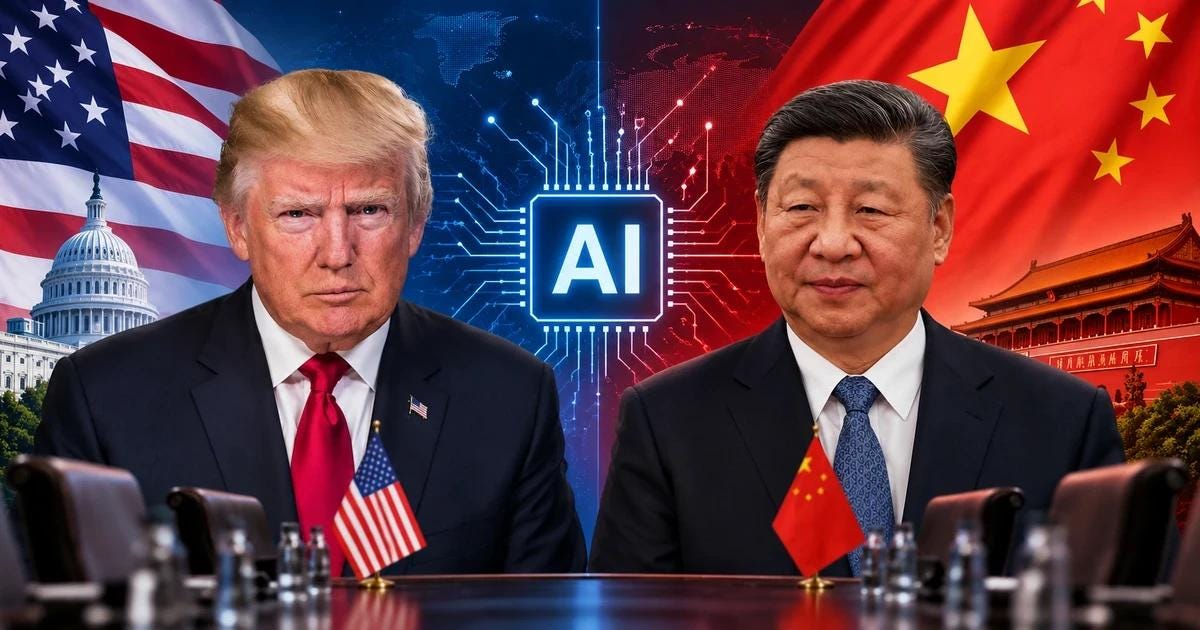
The Trump administration is considering a new policy that could require American companies to publicly disclose when they use artificial intelligence models developed in China. The proposal reflects growing concern in Washington that inexpensive Chinese AI technology could create long-term dependencies for U.S. businesses and potentially expose sensitive information to foreign technology providers.
According to people familiar with the discussions cited by Reuters, officials at the Treasury Department and the White House Office of Science and Technology Policy (OSTP) have explored requiring companies to identify their use of Chinese AI models on their websites.
The proposal would represent a different approach to addressing concerns about China’s expanding influence in artificial intelligence. Rather than immediately banning Chinese AI products or imposing sweeping restrictions, the administration could use public disclosure to pressure companies into reconsidering their technology choices.
However, discussions remain preliminary. It is not yet clear whether the proposal has sufficient support within the administration or whether it will advance into a formal regulatory process.
Washington Raises Concerns About Chinese AI Dependence
Chinese AI developers have gained increasing traction among American businesses by offering powerful models at relatively low costs.
Companies are increasingly evaluating alternatives to proprietary systems developed by leading American AI companies, including OpenAI and Anthropic. Chinese models such as Alibaba’s Qwen, DeepSeek and Moonshot AI’s Kimi have attracted attention because of their performance, accessibility and competitive pricing.
These models include open-weight systems, which make core model components available for developers to download, modify and deploy.
For American businesses, the economic appeal is straightforward: lower costs and competitive performance can make Chinese AI attractive for customer service, software development and internal business operations.
But national security officials and China-focused lawmakers see potential risks. They worry that widespread adoption could make American companies dependent on Chinese-developed technology, creating vulnerabilities involving data security, intellectual property and strategic control over critical digital infrastructure.
Airbnb and Other American Companies Under Scrutiny
Airbnb is among the companies drawing attention because it uses Alibaba’s Qwen model to support its AI-powered customer service operations.
The company has maintained that its AI operations overwhelmingly rely on American-developed models. It has also said its limited use of Chinese-origin models occurs through approved U.S.-based service providers, with data and operations kept separate and protected.
Other companies have also attracted congressional scrutiny.
Representatives Andrew Garbarino of New York and John Moolenaar of Michigan have led a congressional investigation into American businesses’ use of Chinese AI technology.
The investigation has involved companies including Airbnb and Anysphere, the developer of the AI coding platform Cursor, which is now owned by SpaceX. Cursor’s Composer model has been associated with technology developed by China’s Moonshot AI.
DoorDash has also received congressional questions after its co-founder acknowledged that some tasks within an internal company system are routed through Moonshot’s Kimi model.
The inquiries reflect growing bipartisan concern in Washington about the national security implications of American companies integrating Chinese AI into their operations.
Intellectual Property Theft Adds to U.S.-China Technology Tensions
The debate extends beyond data security and corporate technology choices. Washington has also raised concerns that Chinese AI companies may have benefited from American artificial intelligence research without proper authorization.
Treasury Secretary Scott Bessent said in July that Chinese AI companies could face sanctions if they were found responsible for stealing U.S. intellectual property through a process known as model distillation.
Distillation involves training a smaller AI model using the outputs of a more powerful model. While it can be a legitimate technical method, U.S. officials have raised concerns that Chinese developers could use it to replicate capabilities developed by American AI laboratories.
OSTP Director Michael Kratsios has similarly accused China of stealing intellectual property from American AI companies on an industrial scale.
Despite these accusations, the administration has so far stopped short of imposing direct punitive measures against Chinese AI developers.
Chinese AI Is Gaining Ground Worldwide
The growing popularity of Chinese AI models is becoming increasingly difficult for Washington to ignore.
According to usage data from the AI marketplace OpenRouter, Chinese-developed models ranked among the three most widely used models by token volume in October.
Their adoption is not limited to private businesses. Reuters previously reported that a U.S. government website had deployed an Alibaba-developed AI model to help users search proposed federal regulations, raising additional questions about the government’s own reliance on Chinese technology.
Meanwhile, American companies are developing competing open-weight alternatives, including products from Meta, Nvidia and Reflection AI.
The competition is increasingly about more than building the most powerful AI system. It also involves controlling the infrastructure, software ecosystems and technological standards that businesses and governments will depend on in the coming years.
A New Front in America’s Technology Competition With China
The proposed disclosure requirement could become an important part of the Trump administration’s broader strategy to protect America’s technological position.
If implemented, companies could face increased public scrutiny over their use of Chinese AI, even when those systems are operated through American service providers.
Supporters argue that transparency would give customers, investors and regulators a better understanding of potential technology dependencies. Critics could question whether publicly identifying companies using foreign AI models would discourage innovation, increase compliance costs or create unnecessary barriers to international competition.
For now, the administration has not announced a final policy or formal disclosure requirement.
But the discussions signal that Washington is increasingly treating artificial intelligence as a strategic national security issue rather than simply another commercial technology market.
As competition between the United States and China intensifies, American companies may soon face a difficult choice: continue using affordable and increasingly capable Chinese AI systems or prioritize domestic alternatives amid growing political and national security pressure.