

A growing wave of technology failures across the United States has raised concerns about the reliability of critical infrastructure, prompting the Trump administration to reassure Americans that the country is not facing a coordinated national crisis.
Over the past several days, disruptions involving Microsoft, the Federal Aviation Administration (FAA), major banking institutions, and airline operations have affected millions of Americans.
The problems have disrupted air travel, interrupted financial transactions, and temporarily affected essential business and government communications.
Despite the growing number of incidents, President Donald Trump and senior administration officials have dismissed suggestions that the outages represent a coordinated cyberattack or a broader national security emergency.
Speaking to reporters in Manila on November 17, Trump downplayed the situation, suggesting that technical problems occasionally happen even within large and powerful organizations.
Vice President JD Vance also sought to reassure the public, saying the administration did not see an immediate crisis developing but emphasized the importance of remaining prepared for unexpected emergencies.
The explanations have done little to quiet concerns among lawmakers and technology experts, who argue that the incidents expose serious weaknesses in America’s aging digital infrastructure.
Microsoft Outage Disrupts Businesses Worldwide
One of the first major disruptions involved Microsoft, where a widespread technical failure affected several widely used services, including Outlook and Microsoft Teams.
The outage prevented many users from accessing email, participating in virtual meetings, and using other workplace applications.
Microsoft attributed the disruption to a technical issue and worked to restore services over approximately two days.
The incident affected businesses and organizations that rely heavily on Microsoft’s cloud-based infrastructure for everyday operations.
Although the company worked to resolve the problem, the outage highlighted how dependent modern businesses have become on a relatively small number of major technology providers.
For companies operating across multiple time zones, even temporary interruptions can create significant financial losses and operational challenges.
FAA Failure Triggers Nationwide Flight Disruptions
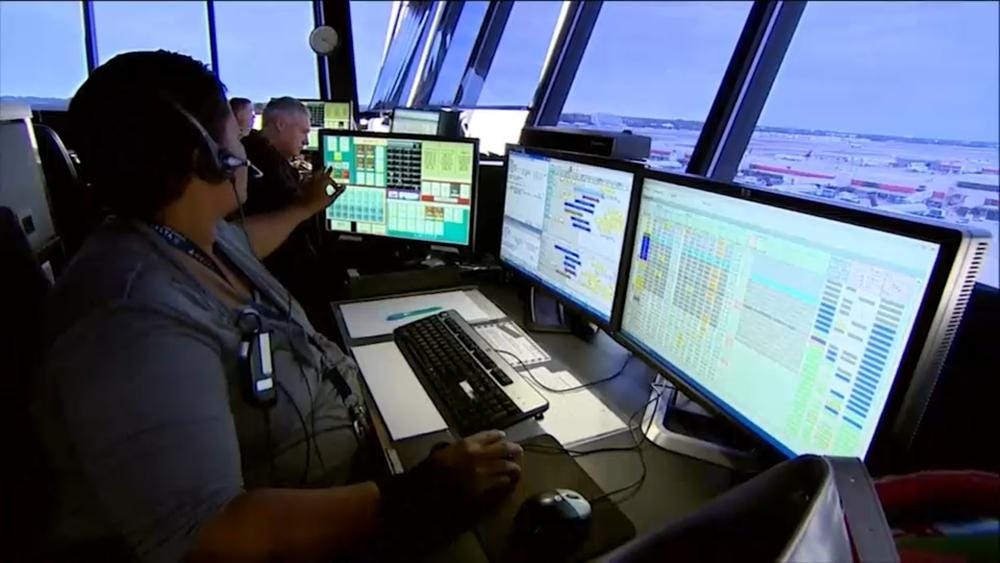
The technology problems escalated when the FAA experienced a major communications failure on Friday, November 13, forcing authorities to temporarily halt departing flights nationwide.
The ground stop lasted approximately four and a half hours, marking the longest nationwide disruption of its kind in roughly 25 years.
Thousands of flights were delayed or canceled, leaving passengers stranded at airports and creating scheduling problems for airlines across the country.
Transportation Secretary Sean Duffy said the disruption involved a communications failure associated with aging air traffic control infrastructure and recently installed equipment.
Investigators have focused on a router failure connected to work replacing older copper wiring with fiber-optic technology.
The disruption demonstrated how vulnerable America’s aviation system can become when essential communications infrastructure stops functioning properly.
Although the FAA eventually lifted the ground stop, the resulting delays continued affecting airline schedules over the following days.
Banking Problems Add to Public Concerns
As the aviation disruption continued to attract attention, another series of technology problems affected major financial institutions.
On Monday, November 16, JPMorgan Chase customers reported difficulties accessing online banking services and completing certain transactions.
The bank attributed the problems to a software issue involving its internal hardware systems.
Customers at other financial institutions, including Bank of America, Wells Fargo, and U.S. Bank, also reported intermittent payment difficulties, particularly involving transfers through Zelle.
The problems raised concerns about the reliability of digital banking systems that millions of Americans depend on to manage their finances.
United Airlines also experienced a separate technology outage that delayed approximately 150 flights. The airline said the disruption was relatively brief and lasted around 30 minutes.
Apple services experienced additional technical problems, including disruptions affecting iCloud and Apple Pay, further adding to concerns about the reliability of major technology platforms.
Reports of NSA Network Disruption Raise National Security Questions
Perhaps the most concerning development involved reports that a highly classified communications network used internally by the National Security Agency (NSA) experienced a temporary outage.
CNN reported that the disruption affected the agency’s internal written communications system, citing six people familiar with the situation.
The report added another layer of concern because the NSA plays a central role in America’s intelligence and cybersecurity operations.
However, Reuters reported that the NSA described a temporary network degradation during routine maintenance and said mission-critical capabilities remained operational.
There has been no public evidence establishing that the reported NSA disruption was connected to the failures affecting commercial companies and transportation systems.
The development nevertheless renewed questions about the resilience of government technology networks and the potential consequences of interruptions involving sensitive communications infrastructure.
Homeland Security Says There Is No Evidence of a Cyberattack
Homeland Security Secretary Markwayne Mullin has rejected suggestions that the recent disruptions were caused by a coordinated cyberattack.
Mullin said federal authorities had examined available information and found no evidence of malicious activity connecting the incidents.
He suggested that many of the problems could be related to companies introducing newer technology into older computer systems that were not designed to accommodate modern demands.
According to Mullin, outdated infrastructure combined with software upgrades and complicated technical systems could create unexpected failures.
Director of National Intelligence Jay Clayton also said intelligence officials had not identified evidence of a coordinated cyberattack or state-sponsored activity.
Clayton suggested that technology upgrades, software patches, and modernization efforts could be contributing to the problems.
The administration has emphasized that investigations remain ongoing and that there is currently no confirmed evidence linking the separate outages to a foreign government or organized hacking operation.
Lawmakers Demand Answers as Concerns Grow
Not everyone in Washington is satisfied with the administration’s explanations.
Republican Senator Josh Hawley of Missouri questioned whether the timing of the incidents could reasonably be dismissed as coincidence.
Lawmakers from both political parties have called for greater transparency and more detailed explanations about what happened.
Former White House press secretary Karoline Leavitt also expressed concerns about the situation, saying Americans deserve clear information about the disruptions.
Her comments reflected growing public anxiety about the possibility of additional failures affecting essential services.
The controversy has also renewed scrutiny of federal technology spending, particularly funding previously approved to modernize the nation’s air traffic control infrastructure.
Congress approved approximately $12.5 billion last year for aviation system upgrades. However, lawmakers have questioned why significant portions of that funding have not yet been fully spent.
Transportation Secretary Sean Duffy has subsequently requested as much as $50 billion in additional emergency funding to address the FAA’s infrastructure problems.
The request has generated debate over whether the administration has adequately used the funding already provided by Congress.
JD Vance Says America Needs to Modernize Aging Infrastructure
Vice President JD Vance acknowledged that the recent disruptions highlight longstanding problems involving America’s aging technology infrastructure.
Vance pointed out that some critical government systems still rely on technology that is decades old.
He argued that the country needs to invest in replacing outdated equipment rather than continuing to depend on temporary fixes and complicated workarounds.
However, he rejected suggestions that Americans should prepare for an imminent national emergency.
Vance said the administration is working to strengthen infrastructure and improve the reliability of critical systems, while acknowledging that major modernization efforts require congressional funding.
His comments highlight a larger challenge facing the United States: maintaining essential services while replacing technology that has supported government operations for generations.
Experts Warn Aging Technology Could Be the Bigger Problem
While government officials have emphasized that there is no confirmed connection between the incidents, cybersecurity specialists say the disruptions reveal a broader weakness in modern infrastructure.
Alex Hamerstone, a cybersecurity expert with TrustedSec, has pointed to aging technology and increasing dependence on interconnected computer systems as important factors.
As businesses and government agencies adopt more advanced digital tools, older systems must handle increasingly complicated workloads.
This creates opportunities for software failures, compatibility problems, and unexpected service interruptions.
Experts warn that even when individual incidents are unrelated, the growing dependence on interconnected technology means one failure can have consequences far beyond the organization where it originates.
The challenge is particularly significant for aviation, banking, healthcare, communications, and national security systems.
What Happens Next?
The Trump administration faces growing pressure to explain the recent disruptions and demonstrate that America’s critical infrastructure is adequately protected.
Federal agencies are continuing to examine the causes of the individual incidents, while technology companies work to restore services and strengthen their systems.
Congress is also expected to face renewed pressure to approve additional funding for infrastructure modernization, particularly for the nation’s air traffic control network.
For now, officials maintain that there is no evidence of a coordinated cyberattack or foreign interference behind the disruptions.
However, the events have exposed a significant vulnerability: America’s growing dependence on technology systems that may not be equipped to handle the demands of modern digital infrastructure.
Whether the failures prove to be isolated technical problems or symptoms of a much larger infrastructure challenge, the latest disruptions have made one issue increasingly difficult to ignore.
The United States may not be facing a coordinated cyber crisis, but its aging technology infrastructure is becoming a growing national security and economic concern.