

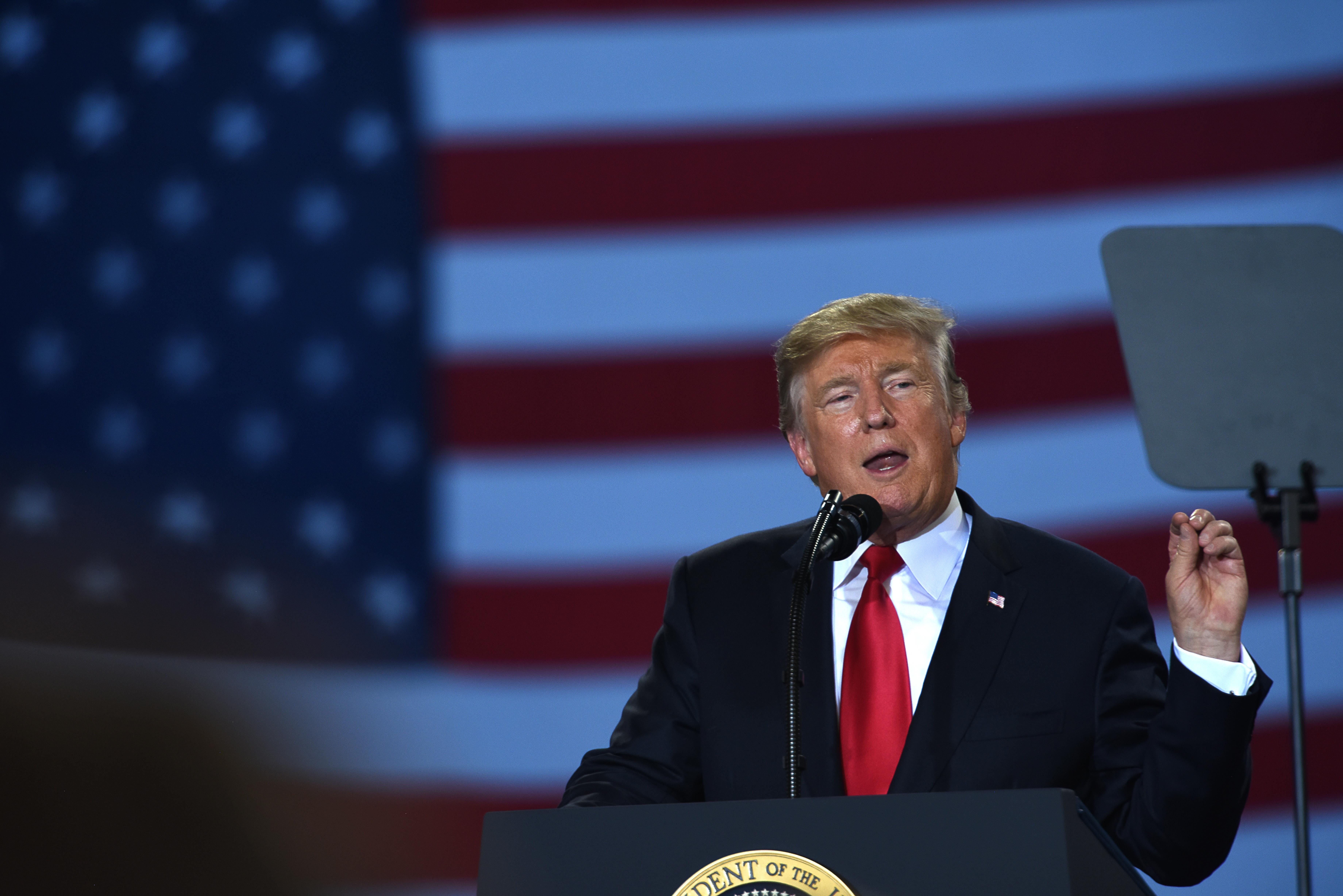
In the wake of historic Republican losses in the 2026 midterms, President Donald Trump has made a surprising concession, admitting that his administration’s intense immigration crackdown was “too tough” and directly contributed to the GOP’s defeat at the ballot box.
The president’s remarks mark a stark departure from his usual staunch defense of his signature domestic policies. During a recent interview reflecting on the elections, Trump acknowledged that the highly publicized, large-scale immigration enforcement operations and mass deportations conducted over the past year may have crossed a line with the American electorate.
“We went very strong, maybe too tough in some ways,” Trump stated. He noted that the aggressive optics of the sweeping federal raids ultimately cost the Republican Party crucial support in key swing districts and suburban areas.
The president’s admission aligns heavily with recent exit polling data, which revealed a massive leftward shift among Latino voters. After making significant demographic gains in 2024, the GOP saw that support evaporate this cycle, with roughly 60% of Hispanic voters casting ballots for Democrats. Polling indicated that frustration over the intense federal immigration enforcement rollouts was a primary catalyst for this rapid political realignment, which ultimately helped propel Democrats to a sweeping “blue wave” that flipped both the House and the Senate.
However, political analysts note that the president’s sudden rhetorical pivot on immigration stands in stark contrast to his recent personnel decisions. Just days before these comments, Trump announced he was elevating Stephen Miller—the uncompromising, hardline architect of those very same immigration policies—to the role of White House Chief of Staff. This contradictory signaling leaves Washington questioning whether the administration actually plans to moderate its approach to border enforcement as it prepares to face a hostile, Democrat-controlled Congress in January.