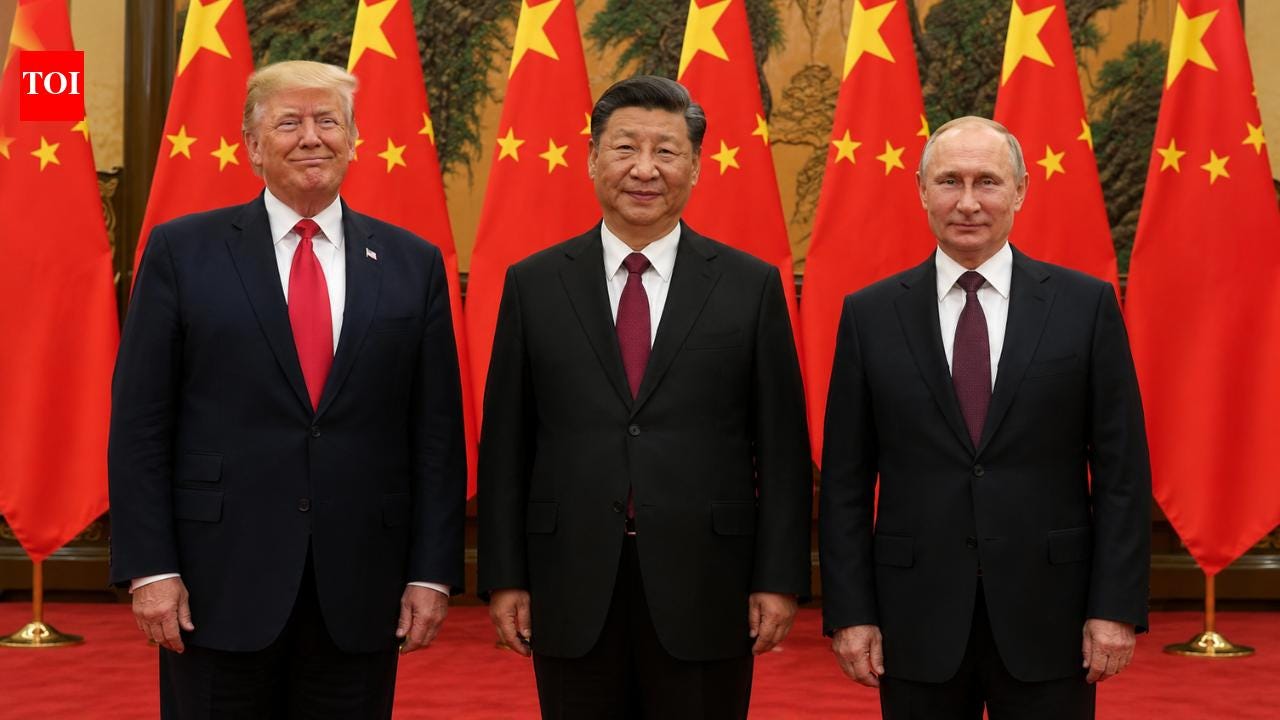
President Donald Trump arrived in China on Wednesday for a high-stakes diplomatic visit that will culminate in an unprecedented meeting with Chinese President Xi Jinping and Russian President Vladimir Putin.
The three leaders are scheduled to meet Thursday, November 19, on the sidelines of the Asia-Pacific Economic Cooperation (APEC) summit in Shenzhen. It will be the first known trilateral meeting involving the leaders of the world’s three major nuclear powers.
The summit comes at a critical moment for international relations, with the United States confronting competing challenges involving China, Russia, Iran, nuclear proliferation and the rapid development of artificial intelligence.
Trump has indicated that he wants to use the gathering to discuss reducing nuclear weapons and addressing international conflicts. He has also expressed optimism that progress could be made toward ending Russia’s war in Ukraine.
The meeting offers an extraordinary diplomatic opportunity, although officials and analysts have cautioned that expectations for immediate agreements should remain limited.
Xi personally welcomes Trump in Shenzhen
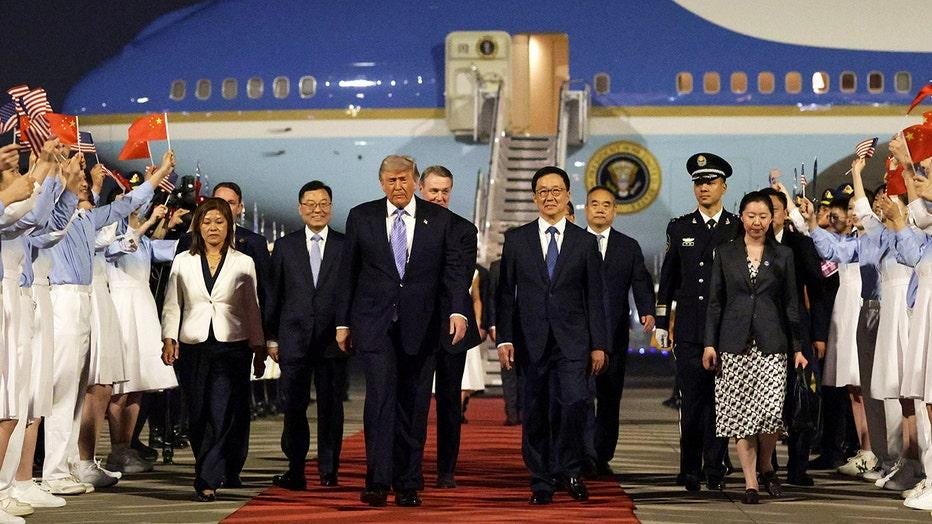
Xi gave Trump a high-profile welcome at Shenzhen Bao’an International Airport, greeting the American president as he stepped off Air Force One.
The reception included a red carpet, a ceremonial welcome and groups of performers waving flags. The two leaders shook hands and briefly embraced before proceeding together.
The gesture was particularly significant because it reciprocated the personal welcome Trump extended to Xi during the Chinese leader’s visit to Washington in September.
Putin, who also arrived in China on Wednesday, did not receive the same airport greeting from Xi, despite the longstanding relationship between Beijing and Moscow.
The contrast in the reception underscored the diplomatic importance China attaches to its relationship with Washington as it seeks to manage competition with the United States while maintaining strategic ties with Russia.
Nuclear weapons and Ukraine expected to dominate discussions
One of Trump’s central objectives is to discuss nuclear arms control with Xi and Putin.
The president has repeatedly argued that reducing the world’s nuclear arsenals should be a priority for the major powers. Bringing Washington, Beijing and Moscow into the same conversation would represent a significant diplomatic development.
The three countries possess the world’s largest nuclear arsenals, making their cooperation—or confrontation—central to global security.
Trump has also raised the possibility of discussing the war in Ukraine, which began with Russia’s full-scale invasion in February 2022.
Although administration officials initially indicated that Ukraine would not be a major focus of the trilateral meeting, Trump has since suggested that he wants to address the conflict directly.
“I think it’s very close to getting it done,” Trump said when discussing the prospects for ending the war.
Putin has an interest in using the gathering to advance Moscow’s position on Ukraine, while Beijing has sought to maintain its relationship with Russia without becoming directly responsible for resolving the conflict.
Whether the three leaders can identify common ground remains uncertain, particularly because Ukraine will not be represented at the meeting.
Trade tensions and artificial intelligence add pressure
The summit is also taking place against the backdrop of intensifying competition between Washington and Beijing over technology and international trade.
The United States has tightened restrictions on China’s access to advanced artificial intelligence chips, arguing that sensitive technology must not strengthen Beijing’s military capabilities or undermine American national security.
China has strongly criticized the restrictions and warned against what it describes as protectionist policies.
Xi has used the APEC gathering to promote free trade, investment and opposition to unilateral economic measures.
The technology competition is especially important because advanced semiconductors are essential to developing powerful AI systems, military applications and next-generation computing infrastructure.
Trump has signaled that he wants to preserve a productive relationship with Xi while protecting American technological leadership.
The two governments also face pressure to maintain their fragile trade truce, which is expected to expire in January 2027.
Agricultural purchases, critical minerals, tariffs and market access are among the economic issues likely to shape their discussions.
Iran also on the diplomatic agenda
The war involving Iran adds another major dimension to the discussions.
Trump has indicated that he wants to discuss the conflict with Xi and Putin, both of whom have strategic interests in the Middle East.
China has significant economic and energy interests in the region, while Russia has maintained close diplomatic and military relationships with Tehran.
For Washington, discussions with Beijing and Moscow could provide an opportunity to explore whether the two countries are willing to support efforts to reduce regional tensions.
However, their interests do not necessarily align with those of the United States, and there is no guarantee that the summit will produce a coordinated approach to Iran.
Trump bets on personal diplomacy
Trump has signaled that he intends to approach the summit with an informal, relationship-driven diplomatic style.
Rather than relying exclusively on carefully scripted negotiations, he has emphasized the importance of direct conversations with world leaders.
His approach reflects his belief that personal relationships can help resolve disputes that have resisted traditional diplomatic efforts.
The president has also expressed interest in a possible separate conversation with Putin and floated the possibility of meeting North Korean leader Kim Jong Un during the Asia trip. However, no meeting with Kim had been confirmed as of Wednesday.
The U.S. delegation includes prominent business figures, including Elon Musk, whose companies have significant commercial interests connected to China. Musk is expected to participate in parts of the broader trip but is not scheduled to join the trilateral meeting.
A historic summit with uncertain consequences
The gathering in Shenzhen places three of the world’s most influential leaders in the same room at a time when the international order is facing significant pressure.
For Trump, the meeting offers an opportunity to demonstrate American diplomatic leadership, pursue nuclear arms control and potentially make progress on conflicts that have threatened global stability.
For Xi, hosting the American and Russian presidents reinforces China’s position as a central diplomatic power.
For Putin, participation provides an opportunity to engage directly with Washington and Beijing while Russia remains under extensive Western sanctions and continues its war in Ukraine.
Still, the summit’s historic symbolism should not be confused with guaranteed results. The leaders have competing national interests, and disagreements over Ukraine, Taiwan, trade, technology and Iran remain substantial.
Whether the meeting produces meaningful agreements or primarily serves as a demonstration of diplomatic engagement, its outcome could influence relations among the world’s three major powers for years to come.