

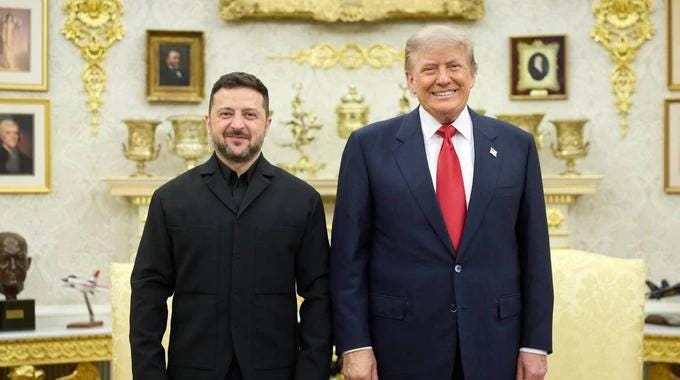
President Donald Trump called for Ukraine to replace President Volodymyr Zelenskyy on Saturday, October 10, after the Ukrainian leader criticized a new arrangement allowing Russian diesel to enter international markets.
Speaking to reporters outside the White House, Trump said Ukraine needed a leader capable of reaching an agreement to end the war with Russia. He also demanded that Kyiv stop attacking Russian oil refineries, arguing that the strikes were contributing to global fuel-supply problems and higher prices.
The comments marked another sharp turn in the relationship between Washington and Kyiv as the Trump administration seeks to lower energy costs while pursuing negotiations to end Russia’s war against Ukraine.
Trump Says Ukraine Needs a New President
Trump made his position explicit when asked about Zelenskyy and the prospects for ending the conflict.
“It’s time for Ukraine to get a new president,” Trump told reporters, arguing that Zelenskyy had failed to secure an agreement despite opportunities to negotiate.
Trump also accused the Ukrainian leader of prolonging the conflict and said Ukraine’s attacks on Russian energy infrastructure were creating problems for global fuel supplies.
The president has repeatedly criticized Kyiv’s negotiating strategy and pressed for an end to the war, which began with Russia’s full-scale invasion in February 2022.
Zelenskyy and his government have maintained that any settlement must protect Ukraine’s sovereignty and security.
Russia Diesel Deal Triggers New Dispute
The immediate dispute followed Trump’s announcement that Russia would supply diesel to international markets under an arrangement involving a temporary easing of U.S. sanctions.
Trump said Russia would initially provide more than 300,000 tons of diesel, followed by another 500,000 tons in November and an additional 1 million tons thereafter. He also described the prospect of further deliveries totaling 3 million tons, depending on the condition of Russia’s refineries.
The Treasury Department announced a temporary sanctions waiver intended to allow Russian diesel supplies to reach the global market.
The administration’s stated rationale is to increase available fuel supplies amid rising energy costs. But the move represents a significant policy tension: Washington is seeking to restrict Russia’s ability to finance its war while permitting some Russian petroleum products to enter the market.
Zelenskyy Says Easing Sanctions Could Finance Russia’s War
Zelenskyy criticized the arrangement, warning that revenue from Russian fuel exports could help Moscow sustain its military campaign.
He argued that easing economic pressure on Russia would undermine efforts to force the Kremlin toward peace and could enable further attacks against Ukrainian cities and infrastructure.
The Ukrainian president also connected the timing of the diesel arrangement to deadly Russian strikes on Ukraine. On October 10, Ukrainian officials reported that Russian aerial attacks in the Zaporizhzhia region killed at least 20 people, including children, and wounded others.
Zelenskyy said the attacks demonstrated why Ukraine opposed measures that could increase Russian revenue while the war continued.
The competing positions underscore the central disagreement: Washington is emphasizing fuel availability and negotiations, while Kyiv argues that reducing pressure on Moscow risks prolonging the conflict.
Ukraine Rejects Outside Pressure to Choose Its Leader
Ukraine’s Foreign Minister Andriy Sybiha responded to Trump’s remarks by saying Zelenskyy had the support of the Ukrainian people and that Ukrainians had the right to decide their country’s leadership.
The exchange raises a fundamental question about Ukraine’s political future during wartime. Under martial law, Ukraine has not held a presidential election since Zelenskyy’s 2019 victory. The country’s election timetable has been affected by the ongoing war and the legal restrictions associated with martial law.
On Sunday, October 11, Zelenskyy said Ukraine could organize elections if Russian President Vladimir Putin agreed to a 60-day ceasefire.
“Please tell Putin, give us two months, 60 days of total ceasefire, 60 days, and we will organize elections,” Zelenskyy told ABC News.
His proposal places the possibility of an election within the context of a temporary halt to fighting, rather than accepting an immediate change in leadership under continuing wartime conditions.
Energy Attacks Become a Central Point of Tension
The argument over diesel exports comes as both Russia and Ukraine continue attacks on energy facilities and other infrastructure.
Ukraine has targeted Russian refineries and oil-related infrastructure in an effort to disrupt the revenue and logistics supporting Moscow’s war. Russia has continued strikes against Ukrainian cities, energy facilities and transportation networks.
Trump has argued that attacks on Russian refineries can worsen fuel-supply problems. Kyiv counters that Russia’s continued military campaign makes economic pressure and the disruption of Russian energy revenue important tools in defending Ukraine.
The dispute has become more consequential as the United States confronts rising fuel costs and the broader effects of the conflict with Iran on global energy markets.
Trump Announces an Energy Ceasefire
On October 11, Trump announced that Russia and Ukraine had agreed to an immediate “energy ceasefire,” intended to halt attacks on energy infrastructure.
However, the status of the arrangement remained contested. Zelenskyy said Russian attacks on Ukrainian energy sites continued after the announcement and indicated that Ukraine was prepared to stop targeting Russian refineries if Moscow halted its own strikes on Ukrainian energy infrastructure.
The developments illustrate the difficulty of turning public announcements into a durable agreement, particularly when the two sides disagree about compliance and the conditions required for a halt to attacks.
A New Test for U.S.-Ukraine Relations
Trump’s call for a new Ukrainian president adds another layer of strain to relations between Washington and Kyiv. The dispute now encompasses Ukraine’s leadership, the terms of a possible peace settlement, attacks on energy infrastructure and the economic consequences of Russian fuel exports.
For the Trump administration, the challenge is to pursue lower energy prices and a negotiated end to the war while maintaining leverage over Moscow. For Zelenskyy, the priority is to prevent a settlement or economic arrangement that leaves Russia better positioned to continue its invasion.
Whether the energy ceasefire holds, whether the diesel arrangement expands and whether negotiations produce a broader agreement will shape the next phase of the conflict.
For now, the exchange reveals a widening gap between the administration’s approach to fuel supplies and negotiations and Ukraine’s insistence that Russia should not receive economic relief while attacks continue.