

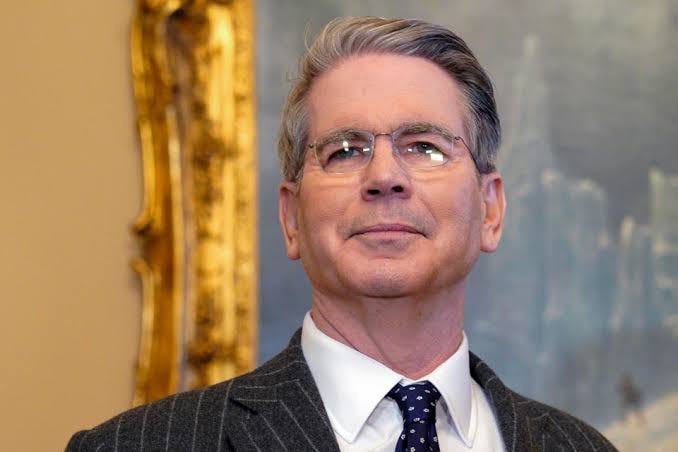
President Donald Trump announced on Friday that Treasury Secretary Scott Bessent will not be leaving his current cabinet post to become the administration’s new artificial intelligence czar.
The clarification puts to rest recent media speculation, including a report from Semafor that identified Bessent as a leading contender to oversee the White House’s ambitious new technology initiatives.
Taking to his Truth Social platform, Trump explicitly shot down the rumors, using his preferred terminology for the advanced technology. “Scott Bessent will not be going to be Super Intelligence (SI) Czar,” the president wrote. “Number One, he doesn’t want to. Number Two, he’s doing such a great job at Treasury, and that’s where I want to keep him! Why would I ever make such a change?”
The Search for a “Super Intelligence” Leader
Trump’s search for an AI czar follows his announcement last week outlining plans to create an “AI Force” modeled similarly to the Space Force.
While the administration has yet to provide concrete operational details for the new agency or leadership role, the president has made it clear that the position is central to maintaining American technological supremacy. Trump recently called AI the “next Industrial Revolution” and predicted it could eventually account for as much as 25% of the country’s GDP.
With Bessent officially out of the running, the shortlist of potential candidates reportedly includes Michael Kratsios, the White House Office of Science and Technology Policy Director, and Scott Kupor, the Office of Personnel Management Director who joined the administration from the venture capital firm Andreessen Horowitz.
A High-Stakes Geopolitical Backdrop
Despite removing himself from consideration for the czar position, Bessent remains a key player in the administration’s technology strategy.
Just days prior to Trump’s announcement, the Treasury Secretary led high-level talks focused on AI safety with Chinese Vice Premier He Lifeng in New York. The discussions, which occurred ahead of this week’s highly anticipated state visit by Chinese President Xi Jinping, centered on establishing bilateral notification mechanisms and addressing national security concerns.
The ongoing geopolitical rivalry over artificial intelligence was prominently on display during Thursday’s state dinner at the White House. While the Chinese delegation consisted exclusively of government officials, Trump invited a powerhouse lineup of American tech executives, including Apple CEO Tim Cook, Nvidia CEO Jensen Huang, and OpenAI CEO Sam Altman, underscoring the deep integration between the U.S. government and its private technology sector.