

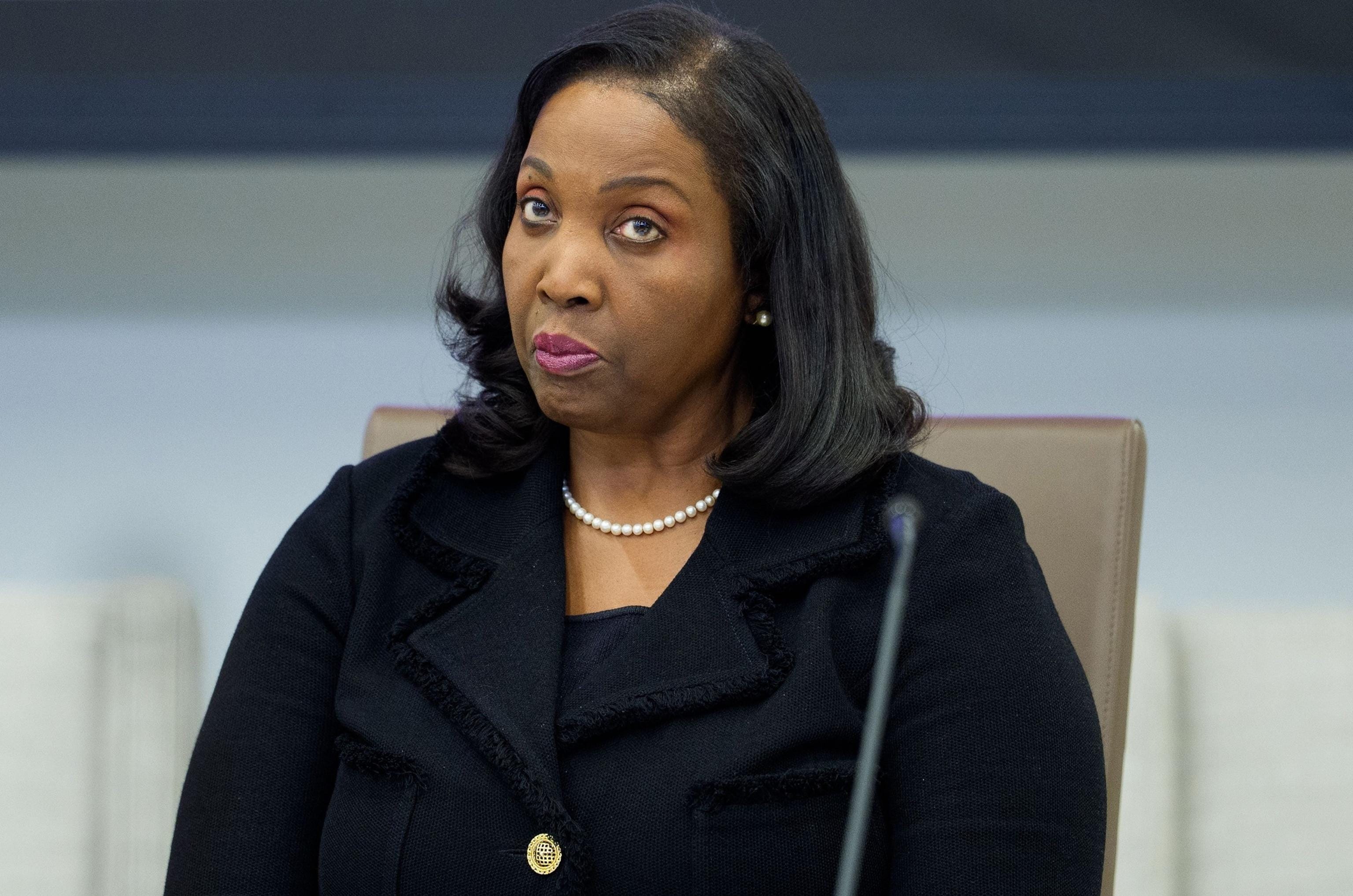
President Donald Trump has established a special committee to investigate allegations that Federal Reserve Governor Lisa Cook made false statements on mortgage documents, escalating his effort to remove her from the central bank.
In a presidential memorandum dated October 7 and publicized on October 9, Trump directed the panel to investigate the allegations and determine whether there is sufficient cause to remove Cook from the Federal Reserve Board of Governors.
The committee is scheduled to hold an in-person hearing at the White House on November 5. According to the memorandum, the proceeding will be closed to the public but transcribed.
Trump framed the inquiry as part of his responsibility to ensure federal officials comply with the law. Cook, a Biden appointee, denies the allegations and has challenged the president’s previous attempt to dismiss her.
The new proceeding marks another chapter in an increasingly consequential dispute over the president’s authority over the Federal Reserve, an institution whose independence is considered important to monetary policy and financial stability.
Who Will Serve on the Committee?
The three-member panel will include senior figures from the Trump administration:
Kevin Hassett, the president’s chief economic adviser.
Andrea Lucas, chair of the Equal Employment Opportunity Commission.
Keith Sonderling, acting head of the Office of Government Ethics.
The committee is authorized to examine the allegations, consider evidence and recommend whether there is cause to remove Cook from office under the law governing Federal Reserve governors.
The White House memorandum also permits the panel to consult officials from executive departments and agencies, including the Department of Justice.
Cook will be allowed to submit a written position statement before the hearing, present arguments and written evidence, and provide witness statements. She must appear at the proceeding and may be questioned by committee members or authorized representatives.
After the hearing, Cook may submit an additional written statement by November 10. The committee is then directed to deliver written findings and legal conclusions to Trump as soon as practicable.
The Mortgage Allegations Explained
The dispute began with allegations raised by Bill Pulte, director of the Federal Housing Finance Agency, concerning mortgage documents associated with properties in Atlanta, Georgia, and Michigan.
The allegations center on whether Cook represented both properties as primary residences in mortgage-related paperwork, potentially affecting the terms under which the loans were obtained.
Cook has denied committing mortgage fraud. Her legal team has disputed the allegations, and independent analysis has questioned whether the documents establish the wrongdoing claimed by the administration.
Reporting has also highlighted a distinction in the mortgage records: Reuters previously reported that Cook had identified her Atlanta property as a vacation home. That detail is relevant to the administration’s claim that the properties were improperly represented as primary residences.
At this stage, the allegations have not been established as a finding of mortgage fraud. The purpose of the new committee is to evaluate the claims and advise Trump on whether they provide grounds for removal.
Cook’s Lawyers Question Whether the Hearing Will Be Fair
Cook’s attorneys, Abbe Lowell and Norm Eisen, have questioned whether the committee can conduct a genuinely independent review.
They said Trump’s repeated public statements that he had already decided to remove Cook raised serious doubts about whether the hearing would be an objective assessment of the evidence.
Nevertheless, her lawyers said Cook welcomes an opportunity to present the facts and demonstrate that there is no legal basis for her dismissal. They also said they had been communicating with the White House to assess whether the proposed process could be legitimate rather than merely procedural.
The dispute places the committee’s structure and procedures under scrutiny even before the hearing begins. The panel is composed of officials serving in the Trump administration, while the president himself has publicly expressed his desire to remove Cook.
The administration, for its part, has established a formal process that provides Cook with an opportunity to respond to the allegations before a final decision. Whether that process satisfies the applicable legal requirements could become a point of further litigation.
upreme Court Previously Blocked Trump’s Attempt to Fire Cook
Trump first sought to remove Cook in August 2025, after Pulte raised the mortgage allegations. Cook challenged the move in court, arguing that the president could not lawfully dismiss her on the basis presented.
In June 2026, the Supreme Court allowed Cook to remain in her position while her legal challenge continued. The court concluded that she had not received the procedural protections required before removal, including adequate notice of the charges and an opportunity to respond.
The ruling did not amount to a final determination that the mortgage allegations were false. Instead, it focused on the process the administration had followed.
The White House’s new committee appears designed to address that procedural issue by formally presenting the allegations, reviewing Cook’s response and making a recommendation before Trump decides what action to take.
The case has broader implications because Federal Reserve governors have statutory protections intended to preserve a degree of independence from direct political control. How those protections apply to allegations of personal misconduct remains central to the dispute.
The Fight Over Federal Reserve Independence
The dispute with Cook comes amid Trump’s broader criticism of the Federal Reserve and its approach to interest rates.
Trump has repeatedly criticized Fed leadership over monetary policy, particularly when the central bank has resisted calls for faster rate cuts. His administration has also questioned the conduct and accountability of officials at independent federal agencies.
The Federal Reserve occupies a distinctive role in the U.S. government. Its decisions on interest rates and monetary policy can affect borrowing costs, inflation, employment, financial markets and the broader economy.
Supporters of strong presidential oversight argue that senior federal officials should be accountable for misconduct. Critics of the effort to remove Cook warn that using disputed allegations to target a central-bank governor could undermine the institution’s independence.
The Cook case brings those competing principles into direct conflict: the president’s authority to address alleged wrongdoing by an appointee and the legal protections designed to prevent political pressure from determining monetary policy.
What Happens Next?
The next major milestone is the committee’s November 5 hearing at the White House. Cook will have an opportunity to respond to the allegations and submit evidence, after which the panel will prepare its findings and recommendation.
The hearing will not be open to the public, although the memorandum requires a transcript. The panel’s recommendation will inform Trump’s decision on whether he has sufficient cause to remove Cook.
Several questions remain unresolved: whether the mortgage records substantiate the administration’s allegations, whether the committee’s procedures meet the legal requirements identified by the Supreme Court, and whether any subsequent removal attempt would withstand judicial review.
For now, Cook remains a member of the Federal Reserve Board. The inquiry has reopened a high-stakes confrontation over the boundaries of presidential authority and the independence of one of the country’s most consequential economic institutions.