

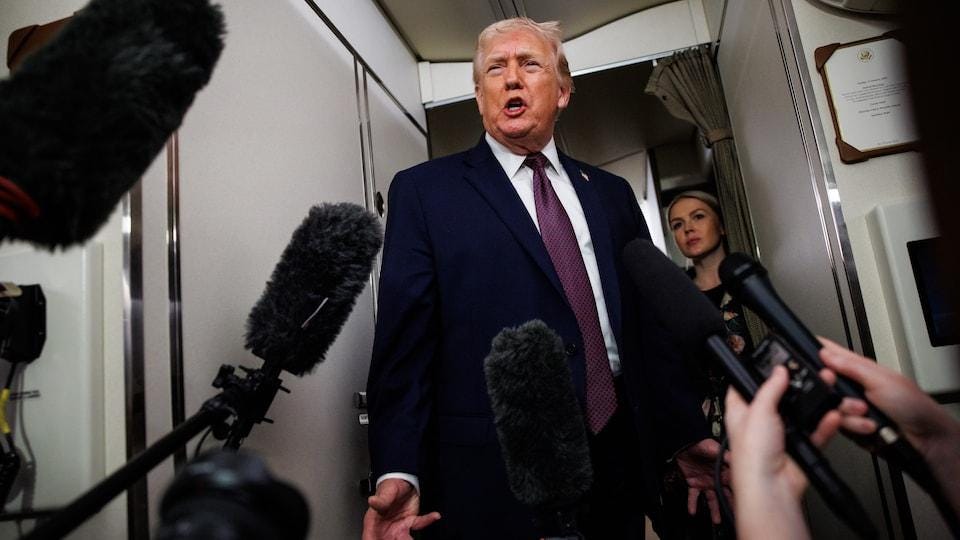
WASHINGTON — President Donald Trump has delivered a forceful warning to Iran, promising overwhelming American retaliation if Tehran carries out a reported attack involving a radiological dirty bomb or chemical weapons on U.S. soil.
In a November 19 interview with Fox News, Trump said American intelligence indicated that Iran was exploring chemical and biological weapons capabilities after suffering setbacks to its nuclear program.
“There is indication that Iran is looking at gases, looking at bio because we’ve shut them out with the nuclear,” Trump said.
The president’s remarks came amid growing concerns over intelligence reports suggesting that Iranian operatives may be exploring ways to target senior Trump administration officials in Washington, D.C.
Asked whether Americans should be worried about a potential attack, Trump responded that he did not believe an attack was imminent but issued an unmistakable warning.
“If it does happen, we wipe them out,” Trump declared.
When asked whether he stood behind that statement, the president replied that he gave his word.
Intelligence Reports Raise Concerns About Iranian Attack Plans
The warning follows a CNN report published November 17 citing seven U.S. officials familiar with intelligence indicating that Iran may be developing contingency plans involving a radiological dirty bomb or chemical weapons targeting Washington.
According to the report, intelligence agencies had identified specific potential locations and targets associated with the alleged planning.
However, American officials stressed that the intelligence did not establish that an attack was imminent or that Iran had made a final decision to execute such a plan.
White House spokesperson Lauren Bis said the administration was monitoring potential threats but emphasized that there were no credible threats to the American homeland at that time.
Homeland Security Secretary Markwayne Mullin also characterized the reported Iranian planning as aspirational rather than evidence of an immediate attack.
The distinction is significant. Intelligence assessments can identify potential threats without establishing that an adversary has the operational capability or intention to carry them out.
Rubio Says No Imminent Threat to Washington
Secretary of State Marco Rubio sought to reassure Americans following the intelligence reports, saying the United States was not facing an imminent threat.
Rubio emphasized that the government remained vigilant and was taking appropriate precautions.
Iran has strongly rejected the allegations.
Its Foreign Ministry described the accusations concerning chemical weapons as baseless and politically motivated, denying that Tehran intends to use such weapons.
The competing statements highlight the uncertainty surrounding the intelligence and the potential consequences of escalating tensions between Washington and Tehran.
What Is a Dirty Bomb?
A dirty bomb is a conventional explosive device designed to disperse radioactive material across an area.
Unlike a nuclear weapon, it does not produce a nuclear explosion or the massive destructive energy associated with an atomic bomb.
Its principal danger comes from the combination of the initial explosion, radioactive contamination, public panic, and the disruption of essential infrastructure.
Experts generally consider dirty bombs weapons of terror and disruption rather than weapons capable of producing the catastrophic destruction associated with nuclear weapons.
A successful attack could nevertheless trigger extensive evacuations, expensive decontamination operations, and significant economic consequences.
Trump Signals Iran Decision May Extend Into 2027
Beyond the immediate security concerns, Trump suggested that a decision on renewed large-scale military action against Iran might not come until after the beginning of 2027.
“We’re going to have a new year coming up, and we’ll see what happens after January 1,” he said.
The president also reiterated that Washington remains in contact with Tehran and that Iranian representatives have expressed interest in negotiating an agreement.
Trump, however, insisted that any deal must provide lasting guarantees and prevent Iran from rebuilding its military and unconventional weapons capabilities.
“I want a deal that can be lasting,” he said.
He added that the United States would bring the confrontation to an end, through negotiations or other means.
“One way or the other, we’ll finish it off,” Trump stated.
The comments suggest that military pressure and diplomacy remain parallel elements of the administration’s approach.
Israel Pushes Washington Toward Renewed Military Action
While Trump has indicated that he is not rushing into another major military decision, Israeli officials are reportedly pressing Washington to consider renewed strikes against Iran.
According to reporting cited by The Jerusalem Post, Israeli Prime Minister Benjamin Netanyahu has been advocating additional military action, with discussions reportedly involving potential joint U.S.-Israeli operations.
Israeli officials have expressed concerns that Iran could use the current period to rebuild or expand its military capabilities, including chemical and biological weapons research.
The debate inside Washington and Jerusalem reportedly centers on whether additional military action is necessary, what objectives it would accomplish, and how Iran might retaliate.
A renewed campaign could also threaten regional stability, particularly around the Persian Gulf and critical energy infrastructure.
A Wider Confrontation With Global Consequences
The growing confrontation between the United States and Iran comes at a time when Washington is also managing its relationships with major international powers, including China and Russia.
Trump’s November meetings with Chinese President Xi Jinping and Russian President Vladimir Putin add another diplomatic dimension to the crisis.
Both countries have significant strategic interests in the Middle East, and any expansion of the conflict could have consequences for international energy markets, regional security, and global diplomacy.
For the Trump administration, the challenge is balancing deterrence with diplomacy while preventing Iran from developing capabilities that could threaten American personnel, allies, and the U.S. homeland.
Washington’s Message to Tehran
Trump’s warning sends a clear message: an Iranian attack against American territory would carry consequences far beyond conventional diplomatic retaliation.
At the same time, the administration has not publicly established that Iran has the operational ability or immediate intention to carry out the reported dirty bomb plot.
For now, intelligence monitoring, diplomatic negotiations, and military contingency planning remain central to the U.S. response.
Whether Tehran chooses negotiation or further confrontation could determine the next chapter of an increasingly dangerous standoff.
The coming weeks, particularly the period surrounding January 1, could prove decisive for U.S.-Iran relations and the future of security across the Middle East.