

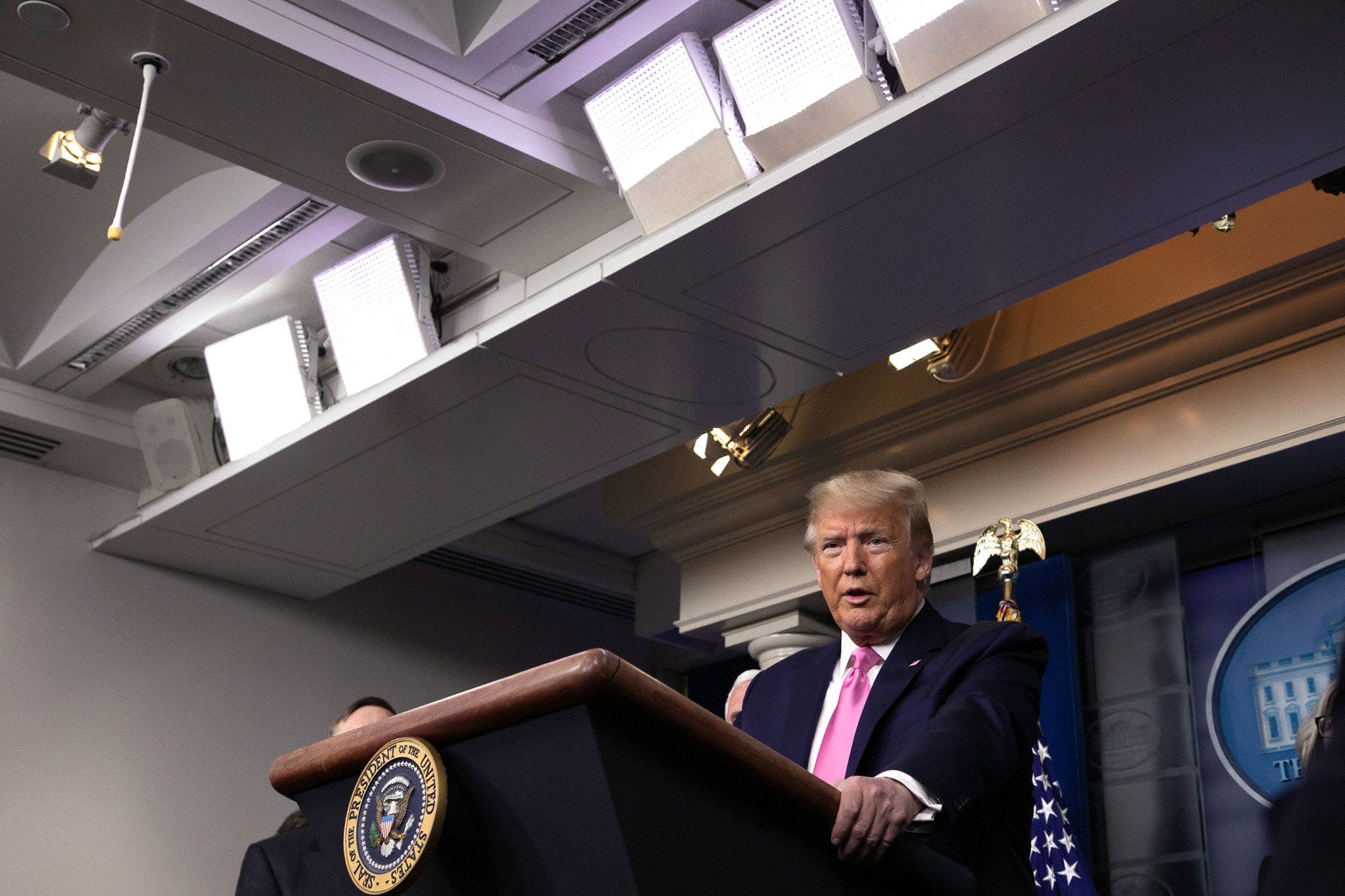
President Donald Trump stated that he has rejected Iran’s most recent peace proposal, deeming the offer inadequate, and left open the possibility of resuming bombing campaigns following the highly anticipated November 3 midterm elections.
During a recent interview, the President noted that it is “possible” he may ramp up military strikes against the Iranian government, emphasizing that he would not accept any diplomatic proposals today that he “wouldn’t have approved a year ago.” When pressed by journalists for specific details regarding potential future military targets, Trump declined to elaborate, simply stating, “I can’t tell you that because look, you know, you’re asking, where are you going to bomb?”
The firm stance on negotiations comes against the backdrop of a rapidly expanding U.S. military footprint in the region as the ongoing conflict with Iran stretches past its seventh month.
According to military officials, three U.S. ships carrying over 7,000 sailors and 2,000 Marines are currently en route to the Middle East, including the USS Theodore Roosevelt carrier strike group and the USS Makin Island amphibious readiness group. Once they arrive, the U.S. could have up to three carriers operating in the region simultaneously by late October—an unusually high naval presence that would push the total number of deployed sailors and Marines past 20,000.
Meanwhile, tensions continue to flare in key maritime chokepoints. British military authorities reported that a tanker was recently struck by an “unknown projectile” while transiting the Strait of Hormuz. The attack sparked a fire on board, though the crew was reported safe. While no group has claimed immediate responsibility, the critical waterway has seen repeated disruptions and near-closures since the U.S. and Israel initiated strikes in late February.
To further squeeze Tehran financially, the Trump administration also announced sweeping new sanctions targeting Iran’s automotive and rail industries. The U.S. Treasury penalized two of Iran’s largest auto manufacturers—along with several foreign suppliers based in Germany, Indonesia, and the UAE—in an attempt to collapse the country’s industrial sector and force capitulation as the Iranian currency plunges to new record lows.