

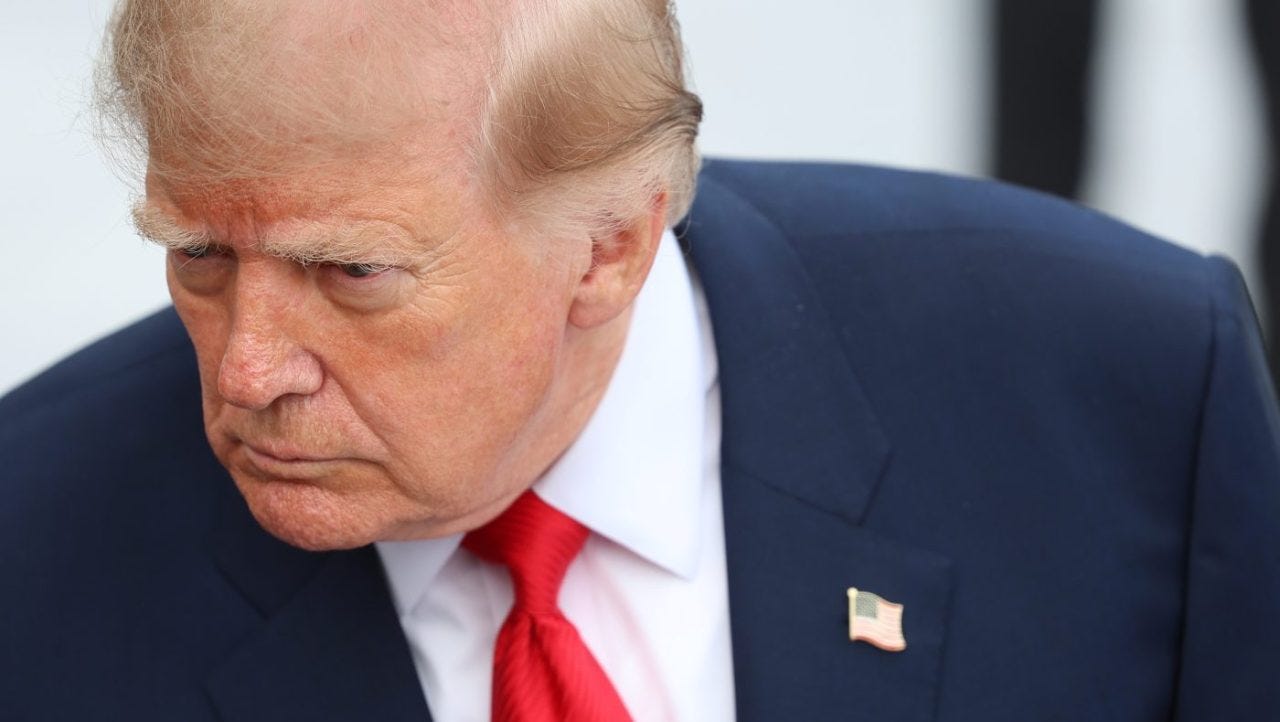
President Donald Trump confirmed on Thursday that the highly anticipated execution of Fort Hood shooter Nidal Malik Hasan will not be livestreamed to the public, walking back prior suggestions that the event could be broadcast worldwide.
Trump took to his Truth Social platform to clarify the administration’s stance on the December execution, which will be carried out via military firing squad.
“Nidal Malik Hasan, a former U.S. Army Major turned traitor, is a very bad and evil man, who killed 13 people, including a pregnant soldier, who died, along with her unborn son, and injured, very seriously, 32 more innocent people,” Trump wrote in his Thursday post.
The president acknowledged the potential deterrent value of publicly broadcasting the execution but ultimately cited public sensitivity as the primary reason for keeping the event private.
“With all of that being said, I think streaming the execution for all to see might have been a strong deterrent for the World to witness how America deals with Terrorists and SCUM like Hasan but, many very good and well meaning people would rather not watch him die, through streaming, or through any other visual device,” Trump continued.
While the general public will not be able to view the execution, Trump confirmed that the families of the victims will be permitted to attend the event in person.
“He will die, as scheduled, by firing squad, but this event will not be streamed. That said, the execution may be viewed in person by the immediate families of the victims, if they so choose. They deserve to witness JUSTICE!” the president concluded.
Hasan, an Army psychiatrist, was convicted and sentenced to death for the November 2009 mass shooting at the Fort Hood military base in Texas. The rampage left 13 dead and more than 30 others severely wounded.
The debate over the execution’s visibility had intensified in recent weeks. War Secretary Pete Hegseth previously floated the idea of livestreaming Hasan’s execution, arguing that maximum transparency and severity would serve as a powerful warning against radical terrorism. However, the proposal generated significant pushback regarding the ethics and potential psychological impact of broadcasting a state execution.