

President Donald Trump says he was not involved in the decision to livestream the planned execution of Nidal Malik Hasan, the former Army psychiatrist convicted of killing 13 people and wounding 32 others at Fort Hood, Texas, in 2009.
Speaking to reporters during a trip to Syracuse, New York, Trump said he understood the military’s reasoning for making the execution public but distinguished that decision from his approval of Hasan’s death sentence.
“They want to do that because they want to set an example. I wasn’t involved in that decision, but I understand the decision,” Trump said, according to the New York Post.
However, Trump appeared to leave the question unresolved when he addressed reporters at the White House on Saturday, saying he would ultimately decide whether the execution should be shown publicly.
Trump Weighs Whether the Execution Should Be Broadcast
Trump said there were arguments for and against broadcasting the execution, suggesting that publicizing the punishment might deter future attacks.
“There are two thoughts: don’t show it and show it,” Trump said. “By showing it, maybe other people won’t be doing what he did. So I’ll make a decision, ultimately.”
The comments followed reports that Defense Secretary Pete Hegseth had confirmed the Pentagon’s plan to livestream the execution.
Trump has separately expressed support for the death penalty in Hasan’s case, describing the convicted gunman as violent and saying he believed the punishment was appropriate.
The distinction matters: approval of Hasan’s death sentence and approval of a public livestream are separate decisions. Trump’s latest remarks suggest that the latter remains under consideration.
Pentagon Sets December 3 Execution Date
The U.S. Army announced that Hasan’s execution is scheduled for December 3, 2026, at 1 p.m. Central time at Fort Hood, Texas. The execution is to be carried out by firing squad.
According to the Army, Trump approved Hasan’s death sentence on October 2 after the military appeals process had concluded. Acting Secretary of the Army Adam Telle subsequently directed the execution and established the date.
Hasan was convicted by a military court-martial in 2013 on 45 counts, including 13 counts of premeditated murder and 32 counts of attempted premeditated murder. The jury sentenced him to death.
The Army said the execution date was set in accordance with military regulations governing the period following presidential approval of a death sentence.
Fort Hood Attack Remains One of the Deadliest Acts of Violence on a U.S. Military Base
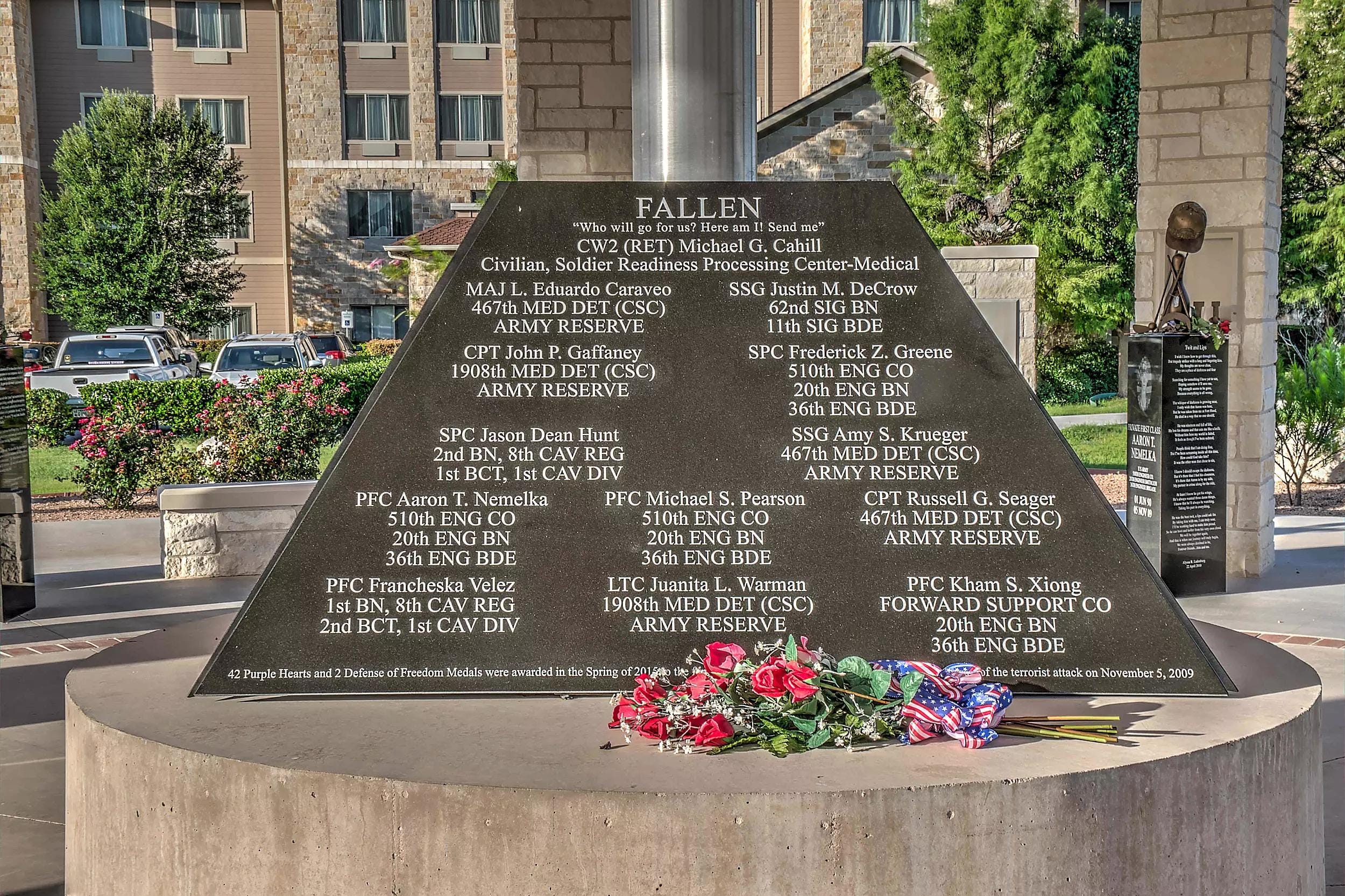
On November 5, 2009, Hasan opened fire inside the Soldier Readiness Processing Center at Fort Hood, killing 13 people and wounding 32 others.
Hasan, then an Army major and psychiatrist, was convicted after a court-martial and sentenced to death. His conviction and sentence survived the military appeals process, and the U.S. Supreme Court declined to review his case in March 2025.
The attack devastated military families and prompted extensive scrutiny of how the Army handled warning signs before the shooting.
The planned execution would mark a rare use of the military death penalty. The Army identifies December’s scheduled execution as a significant milestone in a system in which executions have been exceptionally uncommon for decades.
Republican and Democratic Lawmakers Criticize Livestream Plan
The proposed broadcast has generated opposition from both parties, including lawmakers who support the death penalty but object to turning an execution into a public spectacle.
Republican Sen. Thom Tillis of North Carolina criticized the livestream proposal, arguing that the execution should not be broadcast even if Hasan’s death sentence is carried out. Republican Sen. John Curtis of Utah also urged the Pentagon to reconsider.
Democratic Sen. Chris Murphy of Connecticut condemned the idea of publicly broadcasting an execution, while other critics have warned that the footage could be used for propaganda or glorify political violence.
The criticism extends beyond Washington. Archbishop Paul Coakley, president of the U.S. Conference of Catholic Bishops, called on the Pentagon to reconsider, arguing that a public execution would undermine the country’s moral standing.
Supporters of the proposal, including Hegseth, have argued that making the consequences of Hasan’s crimes visible could serve as a deterrent. Whether a livestream would actually deter future violence remains contested.
Vance Says He Would Not Watch
Vice President JD Vance has also addressed the proposal, saying he would not personally watch the execution if it were livestreamed.
Vance additionally suggested that the broadcast might not ultimately take place, leaving open the possibility that the Pentagon’s current plan could change.
Trump’s statements similarly indicate that the public broadcast is not necessarily settled. While the Army has formally scheduled the execution, the question of whether it will be livestreamed remains subject to further decision-making.
A Debate Over Deterrence, Transparency and Public Executions
The controversy has reopened broader questions about how the government should carry out capital punishment and whether broadcasting an execution serves a legitimate public purpose.
Supporters of the livestream argue that the public should understand the consequences of attacks on military personnel and that visible punishment may discourage similar crimes. Opponents contend that broadcasting a killing risks turning a legal punishment into a spectacle and could provide extremist groups with material for propaganda.
Those arguments are distinct from the question of Hasan’s guilt, which was established in his military trial, and the death sentence that followed.
For now, the Army’s announced date remains December 3. Trump’s latest comments suggest that the final decision on a livestream has yet to be clearly settled, despite earlier reports that the Pentagon intended to broadcast the execution.