

U.S. President Donald Trump waded into one of Europe’s most politically sensitive issues this weekend, publicly expressing his support for the reunification of Ireland during a visit to Dublin.
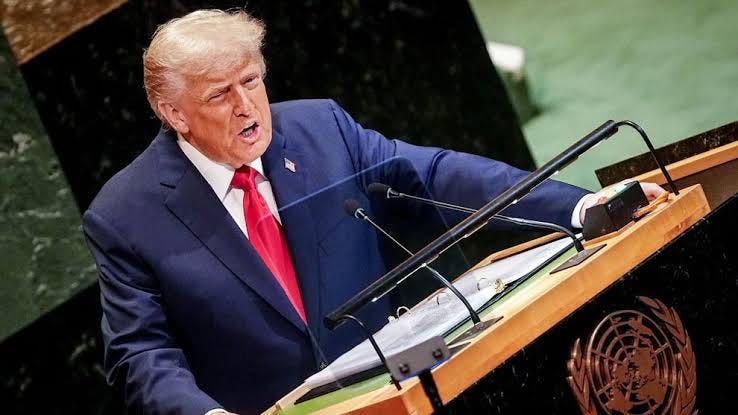
Sitting alongside Irish Prime Minister Micheál Martin, Trump told reporters that a united Ireland merging the Republic of Ireland and Northern Ireland—which is part of the United Kingdom—would be a “fantastic thing.”
“I don’t want to cause any problems, but I will tell you, I’d love to see it unified,” Trump said. “It’s going to happen eventually. It may as well happen now.”
While acknowledging that the U.K. “will have something to say about it, obviously,” Trump reiterated his stance when pressed later, describing reunification as a “very cool thing” and adding that he viewed Martin as the “right man” to help move the process forward.
Swift Backlash from Unionists and U.K. Officials
The unexpected intervention jolted his hosts and immediately drew sharp rebukes from British politicians and pro-British unionists in Northern Ireland.
Kemi Badenoch, leader of Britain’s opposition Conservative Party, criticized the U.S. President for “shooting from the hip as usual,” calling his remarks “deeply unhelpful” and warning that they create “unnecessary tension.”
Meanwhile, Democratic Unionist Party (DUP) leader Gavin Robinson rejected Trump’s comments outright, asserting that the future of Northern Ireland “will be decided by the people of Northern Ireland, not by commentary in London, Dublin or Washington.” Conversely, Sinn Féin leader Mary Lou McDonald welcomed the statement, arguing that the Irish government should actively begin preparing for a peaceful transition to reunification.
Trump’s remarks mark a notable departure from previous U.S. administrations, which have historically maintained a carefully neutral stance on Ireland’s constitutional future, having played a key brokering role in the 1998 Good Friday Agreement.
A Visit Defined by Contrasts
Trump’s two-day trip to Ireland blurred the lines between state diplomacy and personal business interests. Beyond his meeting with Prime Minister Martin, Trump held talks with left-wing Irish President Catherine Connolly—an outspoken critic of the U.S. leader who participated in protests against his 2019 visit. According to her office, Connolly used the meeting to convey the Irish people’s view that “the normalization of war and genocide can never be accepted.”
While thousands of protesters marched through central Dublin condemning his policies and holding signs labeling him a warmonger, Trump received a very different reception on the west coast. Traveling to his luxury golf resort in Doonbeg, County Clare, for the Irish Open, the President was greeted by cheering supporters and locals who praised the Trump family’s financial investment in the rural community.