

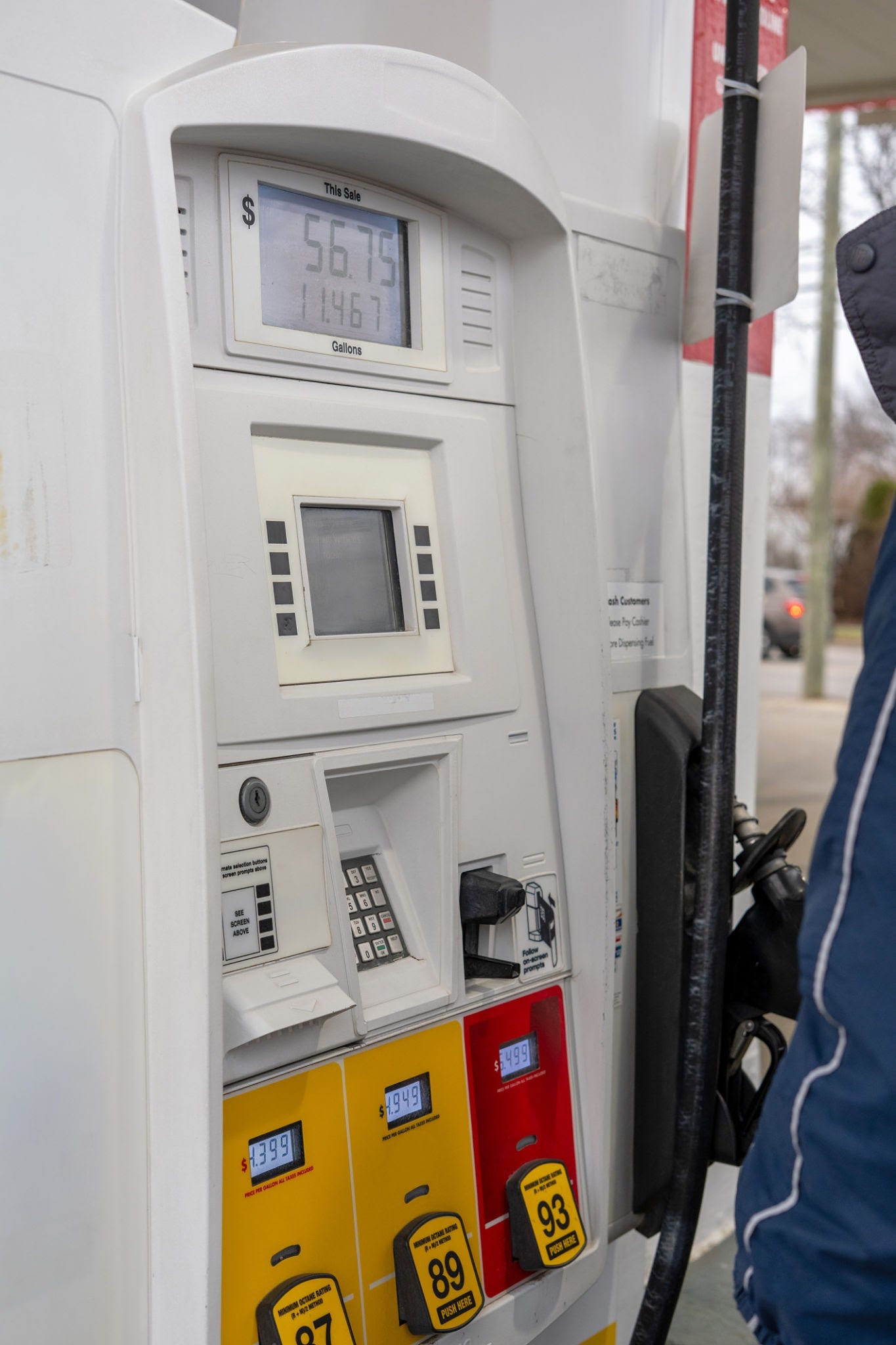
Motorists hoping for a break from skyrocketing gas prices will likely have to wait until November, according to President Donald Trump. Speaking to reporters on Wednesday, Trump indicated that the ongoing military conflict with Iran will not end until “right after” the upcoming midterm elections, meaning fuel prices will remain painfully high through the fall.
“Right after the election, oil prices are going to be tumbling downward,” Trump said. “It’s going to take a little bit longer than the midterms.”
The statements mark a shift in tone for the President, who had previously predicted a swift collapse of the Iranian regime. Instead, Trump suggested Wednesday that Iran is now deliberately dragging out the war in an attempt to influence U.S. voters. Iran is “desperate to try and affect the election so that we can get a nice, weak group of people [in Congress],” Trump claimed, adding that “the war will end immediately after the election because they can’t hold out any longer.”
If Republicans secure a victory, Trump boldly predicted that prices at the pump will eventually plummet below $2 a gallon.
A Heavy Toll on American Consumers
The extended U.S.-Iran standoff continues to take a severe toll on the global energy market. In response to attempted missile strikes on U.S. warships, the U.S. military recently destroyed several Iranian oil tankers in the Persian Gulf, escalating tensions and pushing Brent crude oil past the $100-a-barrel mark for the first time since July.
For everyday Americans, the geopolitical friction translates directly to pain at the pump. The national average for regular gasoline hit $4.22 per gallon on Wednesday, according to AAA—up more than a dollar from the same time last year.
The situation is even more dire for the transportation and logistics sectors. The U.S. average for diesel fuel has reached a record-breaking $5.94 per gallon. According to the Energy Information Administration (EIA), U.S. diesel inventories are currently projected to drop to their lowest levels in over two decades, prompting the agency to hike its wholesale price forecasts significantly. Analysts warn that these soaring energy costs will soon trickle down into the price of everyday consumer goods.