

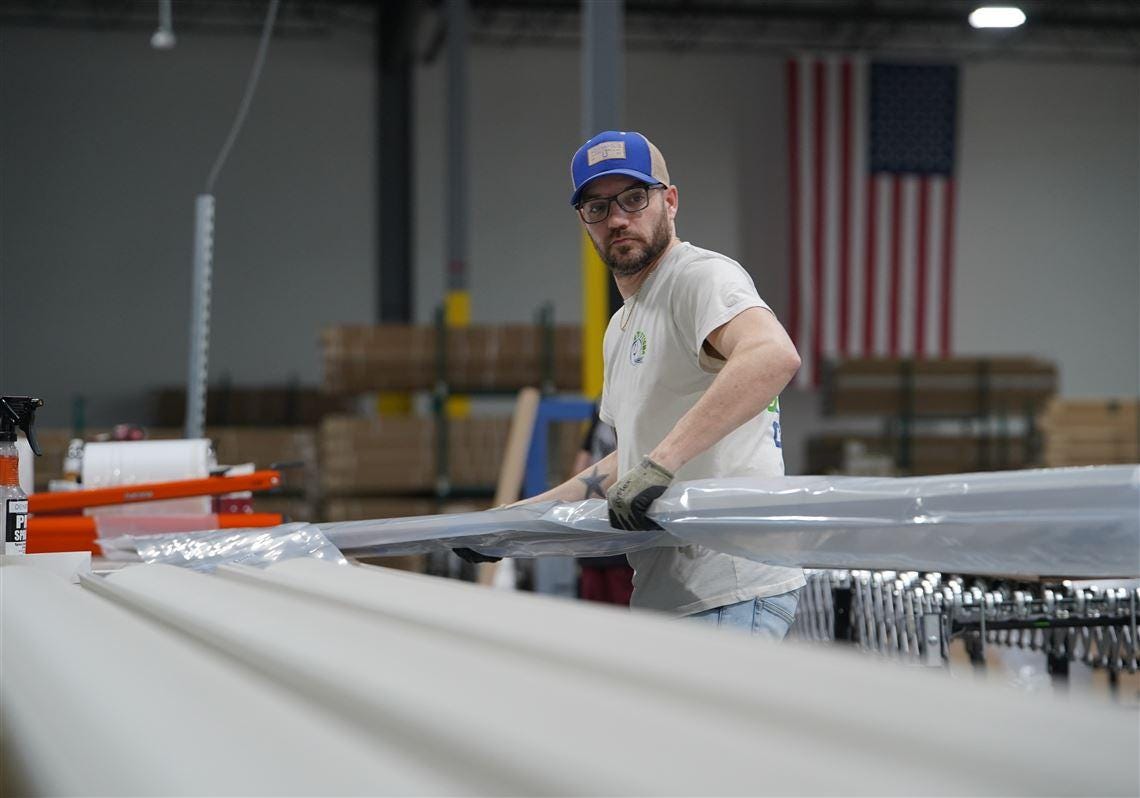
President Donald Trump’s trade policy is facing mounting criticism from American manufacturers who say tariffs intended to protect U.S. industry are adding millions of dollars to their operating costs.
In Ohio, companies that make aluminum building products, kitchen fixtures and other manufactured goods are reporting higher expenses, delayed expansion plans and uncertainty over future demand. Some businesses say the combination of import duties, rising transportation costs and trade tensions with Canada has made it increasingly difficult to plan for growth.
The concerns arrive less than a month before the November 3 midterm elections, as Democrats seek to make economic pressures a central campaign issue. While some U.S. manufacturers benefit from tariffs that make foreign competitors’ products more expensive, others rely on imported materials and overseas customers—and are finding themselves caught in the middle.
Ohio Manufacturer Reports Millions in Additional Costs
Doug Rende, chief executive of Shapes, an aluminum-products manufacturer in North Jackson, Ohio, said tariffs have added between $4.5 million and $5 million to his company’s costs this year alone.
Shapes manufactures and distributes aluminum building products used in applications such as fencing and fixtures. The company has been affected by successive increases in aluminum tariffs, which rose from 10% during Trump’s first term to 25% and then 50% in 2025.
Rende said his company cannot simply pass every additional expense on to customers. When prices rise too far, buyers may delay purchases or seek alternatives, forcing manufacturers to absorb some of the increase themselves.
Higher fuel and freight costs have added another burden. Rende reported shipping surcharges of more than $6,500 per container from some suppliers.
The company has paused recruitment for new positions while investing in robotic assembly, illustrating how businesses may respond to rising costs by delaying hiring and pursuing automation instead.
Tariffs Create a Dilemma for Domestic Producers
The administration’s trade strategy is built around making imported goods more expensive and encouraging companies to manufacture more products in the United States.
For manufacturers competing directly with imported finished products, tariffs can offer a degree of protection. But companies that depend on foreign aluminum, steel, machinery, components or other inputs may face higher production costs before their products reach customers.
The effect varies across industries and businesses. A company that sources most of its materials domestically may face different pressures from a manufacturer that imports specialized components or relies on cross-border supply chains.
The Youngstown Warren Regional Chamber, which represents approximately 3,000 members, described the overall effects of tariffs, the Iran war and immigration-related pressures as a mixed picture, with the net impact negative for many companies in the region.
The challenge for policymakers is that protecting one segment of domestic production can raise costs for another. Whether tariffs generate lasting investment and employment gains depends in part on the availability of domestic alternatives and how businesses respond to the new cost structure.
Canada Trade Dispute Complicates Expansion Plans
For Ohio manufacturers, the deterioration in U.S.-Canadian trade relations is adding to the uncertainty.
Canada is Ohio’s largest export market, accounting for approximately one-third of the state’s exports, according to the report. That makes the Canadian market especially important for businesses that sell manufactured products across the border.
Sam Miller, an Ohio manufacturer of kitchen and bathroom products, said his company has been hit by tariffs on imported materials from Asia while also facing difficulties expanding into Canada.
Miller had planned to open a Canadian distribution facility this year, but trade tensions slowed the project. He said the back-and-forth in trade policy has made it difficult for businesses to plan confidently.
The dispute also affects products that cross the border multiple times during manufacturing. Components may be imported, processed, shipped elsewhere for further work and then returned to the United States as finished goods. Tariffs and administrative uncertainty can complicate each stage.
Washington and Ottawa imposed additional tariffs on one another’s products after trade negotiations broke down in August, intensifying the pressure on businesses that depend on cross-border commerce.
Supreme Court Decision Did Not End the Uncertainty
The legal environment surrounding Trump’s tariffs has added another layer of unpredictability.
After the Supreme Court struck down many of the administration’s duties, Miller received refunds, according to the report. But the administration subsequently reinstated many tariffs under other authorities.
For businesses, the uncertainty can be as challenging as the tariffs themselves. Manufacturers making long-term decisions about equipment, hiring, supplier contracts and new facilities need some confidence about future costs.
A change in tariff rates can alter whether a domestic factory is competitive, whether an overseas supplier remains viable and whether an expansion makes financial sense.
The broader trade policy debate is therefore not limited to whether tariffs are justified. It also concerns how consistently they are applied, which legal authorities support them and how frequently companies must adjust to new rules.
Iran War Adds to Freight and Aluminum Costs
The trade dispute is unfolding alongside higher transportation expenses connected to the war involving Iran.
Manufacturers depend on reliable access to raw materials and predictable shipping costs. Disruptions to energy supplies and trade routes can raise the price of fuel, freight and industrial inputs, placing additional pressure on companies already paying tariffs.
Guy Coviello, president of the Youngstown Warren Regional Chamber, said the combined effects of tariffs, the Iran war and immigration policy were creating a difficult environment for businesses.
He also pointed to the limited availability of domestic aluminum production. While Coviello supported tariffs on strategically important products used in defense and medical industries, he cautioned against duties on goods that are not essential and cannot readily be sourced in the United States.
The distinction is important to manufacturers: tariffs may support domestic production when U.S. suppliers can meet demand, but they can increase costs when businesses have few practical alternatives.
Manufacturing Jobs Become a Midterm Issue
Economic pressure on manufacturers is becoming part of the political debate ahead of the midterms.
Trump has presented tariffs as a means of revitalizing American industry, encouraging domestic investment and reducing dependence on foreign suppliers. Critics argue that the costs imposed on manufacturers and consumers can undermine those objectives, particularly when companies rely on imported inputs.
A separate Associated Press report published October 11 described factory workers facing layoffs and closures amid tariff-related cost increases, including in several industrial states. The report also found that some voters who had supported Trump were reconsidering their views of his economic policies.
The experiences of individual workers and businesses do not establish the overall effect of tariffs on the entire U.S. economy. They do, however, illustrate the uneven consequences of trade policy and the political risks when promised industrial benefits are accompanied by higher costs or lost jobs.
The Broader Economic Test for Trump’s Tariffs
The administration’s central argument is that tariffs can encourage companies to produce more goods in America and strengthen domestic industry over time. The challenge is determining whether those potential gains outweigh higher input costs, retaliatory measures and disruptions to existing supply chains.
Recent trade data offer another measure of the difficulty. The U.S. trade deficit widened to $105.6 billion in August 2026, even as the administration continued using tariffs to discourage imports. Imports reached a record $420.8 billion that month, reflecting strong domestic demand and businesses replenishing inventories, among other factors.
The deficit alone does not prove that tariffs have failed to support domestic manufacturing, since trade balances are influenced by consumer demand, investment, exchange rates and other economic conditions. But the figures show that higher import duties have not yet produced a straightforward reduction in the overall trade gap.
For manufacturers such as Shapes, the immediate issue is more concrete: whether they can absorb higher costs, maintain competitive prices and continue hiring or investing. As the midterms approach, those business decisions are becoming part of the wider debate over whether Trump’s trade policy is delivering the industrial revival he promised.