

Turkey is moving to aggressively liquidate 131 investment funds amid the dramatic collapse of a speculative trading bubble that has severely shaken the country’s capital markets.
The massive intervention puts approximately $17 billion to $18 billion in assets at risk, affecting over half a million accounts held by an estimated 300,000 retail investors. To manage the fallout, Turkish regulators have drafted two of the nation’s largest lenders—İş Bankası and state-run Ziraat Bankası—to oversee a three-month liquidation process for the frozen funds, which were managed by seven different portfolio companies.
The crisis came to a head when Istanbul-based fund manager Pusula Portföy admitted it could not meet its redemption payments to investors on time, triggering a panic as retail investors rushed for the exit.
Inflated Valuations and a ‘Ponzi’ Crackdown
According to financial analysts, the core of the problem stems from a group of investment funds that spent the last two years building highly concentrated positions in related companies. This coordinated trading behavior artificially drove up share prices, wildly inflating the funds’ own net asset values. The spectacular reported returns then drew in new money, fueling a cycle that eventually became unsustainable.
Turkish officials are now treating the collapse as a criminal matter. Justice Minister Akın Gürlek announced that legal action is actively underway against organizations that targeted citizens’ savings through “Ponzi-like schemes” and misleading guidance.
Law enforcement has already launched a coordinated blitz of home and office raids. Four unnamed fund executives have been jailed pending trial, while 51 other individuals face international travel bans and immediate asset freezes. Authorities have also blocked hundreds of social media accounts accused of spreading market panic.
Containing the Economic Fallout
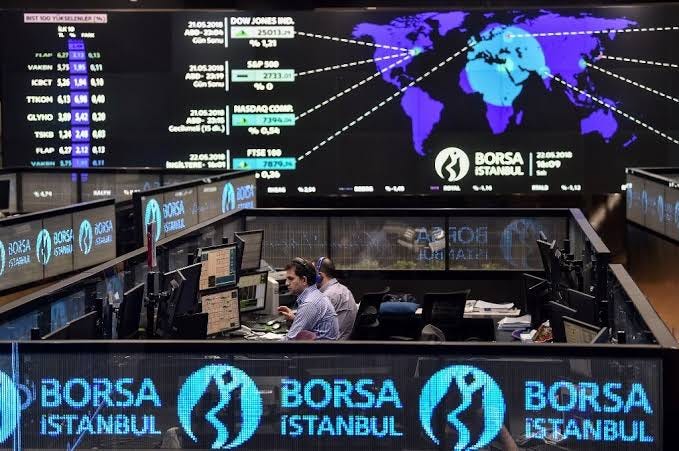
The scandal took a severe toll on the Borsa Istanbul this week. Turkey’s benchmark BIST 100 stock index dropped 8 percent over the week—marking its worst weekly performance since March 2025. To prevent a wider market crash driven by forced selling, the Turkish central bank stepped in to provide emergency liquidity support to local banks.
Despite the turmoil, Finance Minister Mehmet Şimşek reassured the public that the broader banking system remains entirely healthy.
“We have placed the problematic area under quarantine,” Şimşek said in a television interview, stressing that there is “no systemic risk.” He noted that the 131 frozen funds account for only about 10 to 11 percent of the total investment fund sector, while the vast majority of the market continues to operate healthily.
During the liquidation process, the appointed banks will gradually sell off the assets held by the funds. However, because the funds’ valuations were artificially inflated, there is widespread uncertainty regarding how much of their original investments the 300,000 affected citizens will actually be able to recover.