

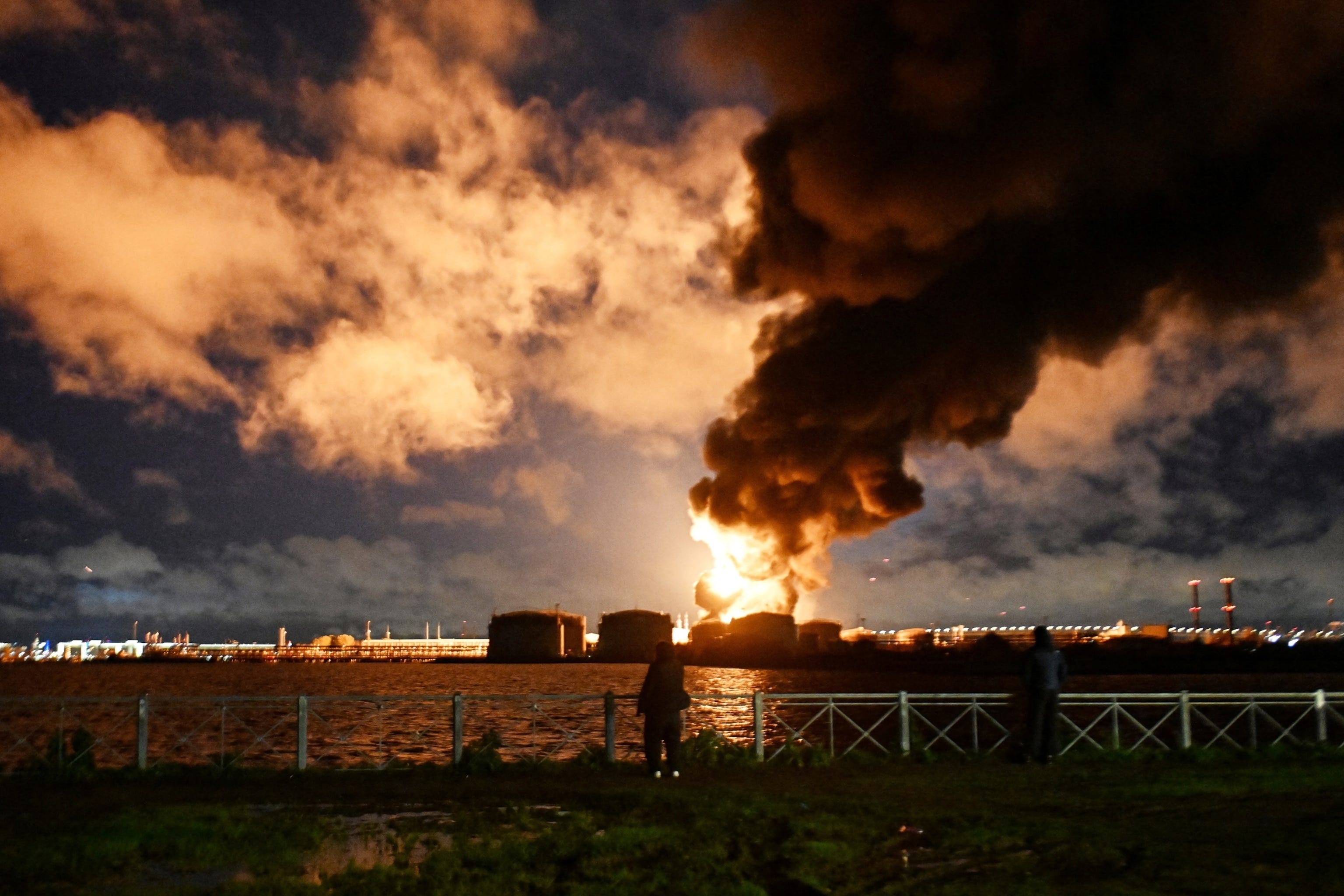
Ukraine launched an extensive overnight drone offensive into Russian territory on Sunday, striking a prominent oil processing facility and a data center.
The assault ignited major fires and cut electricity to thousands of residents across St. Petersburg. Russian defense officials claimed to have intercepted more than 1,000 Ukrainian drones across various regions, though several strikes reached their intended targets. Among the confirmed sites hit was the St. Petersburg Oil Terminal—a strategic asset capable of processing up to 12.5 million tons of petroleum annually—as well as a local logistics center, where officials reported one death and at least five injuries.
Cracks in Proposed Energy Ceasefire
The strikes come just one week after U.S. President Donald Trump publicly claimed that Moscow and Kyiv had established an agreement to halt attacks against one another’s energy sectors. While the White House pushed the pause to alleviate global strain on oil and diesel fuel costs ahead of key midterm elections, Moscow never formally confirmed the pact.
Ukrainian President Volodymyr Zelensky countered that Russia had made a mockery of any proposed truce, stating that Moscow had launched 76 deliberate strikes against Ukraine’s energy, oil, and gas facilities in the seven days following the announcement. Over the preceding 24-hour period alone, Russian missile and drone bombardments killed 11 people, wounded approximately 50 others, and targeted critical energy installations around Odesa.
Diplomatic Friction Over Fuel Markets
The renewed targeting of Russian oil hubs has intensified friction between Kyiv and Washington. Trump sharply criticized the operation on social media, labeling attacks on Russian refineries a “disgrace” and arguing that disrupted output is “seriously hurting the world diesel markets, including those in the United States”.
The escalation coincides with controversial trade maneuvers in Washington. Trump recently moved to waive sanctions on Russian diesel shipments and issued an executive order exempting Moscow from sweeping congressional economic penalties—a decision that drew sharp pushback across Capitol Hill, including from within his own party.