

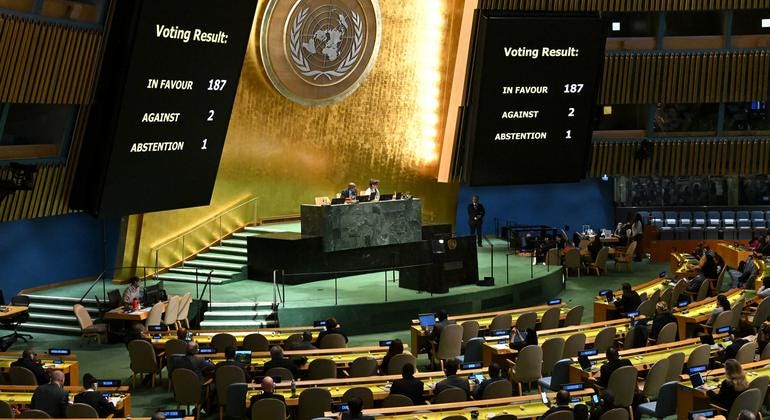
The United States and Cuba engaged in a heated exchange at the United Nations on Monday as the Trump administration campaigned to build opposition to the upcoming annual resolution condemning the U.S. economic embargo against Havana.
For 34 years, the nonbinding resolution has been brought before the General Assembly, typically receiving overwhelming support from the 193 member states. Last year, the resolution passed with a sweeping 165-7 vote. However, the U.S. administration is continuing its “maximum pressure policy,” maintaining the embargo in an effort to force political changes on the island.
Competing Narratives at the UN
The diplomatic clash centered around a U.S.-hosted panel organized by U.S. Ambassador to the U.N. Mike Waltz. The event, titled “Cuba Libre,” featured dissidents and former prisoners. Waltz urged attending nations to look past “70 years of propaganda” and push back against the upcoming resolution.
In response, Cuban Ambassador Ernesto Soberón Guzmán gathered allied diplomats to protest the U.S. event, dismissing it as a “charade.” Guzmán accused the United States of acting as an “international delinquent” and stated that the sanctions inflict collective punishment and immense hardship on the Cuban people.
Context of the Crisis
The political standoff occurs against the backdrop of a deepening economic crisis in Cuba. Since 2020, the island’s 10 million residents have endured severe food shortages, rapid inflation, and widespread power outages.
The deteriorating living conditions have prompted significant waves of domestic protests and driven hundreds of thousands of Cubans to migrate to the United States. As the General Assembly prepares to cast its votes next week, both nations are intensifying their efforts to sway the international community regarding the decades-long trade embargo.