

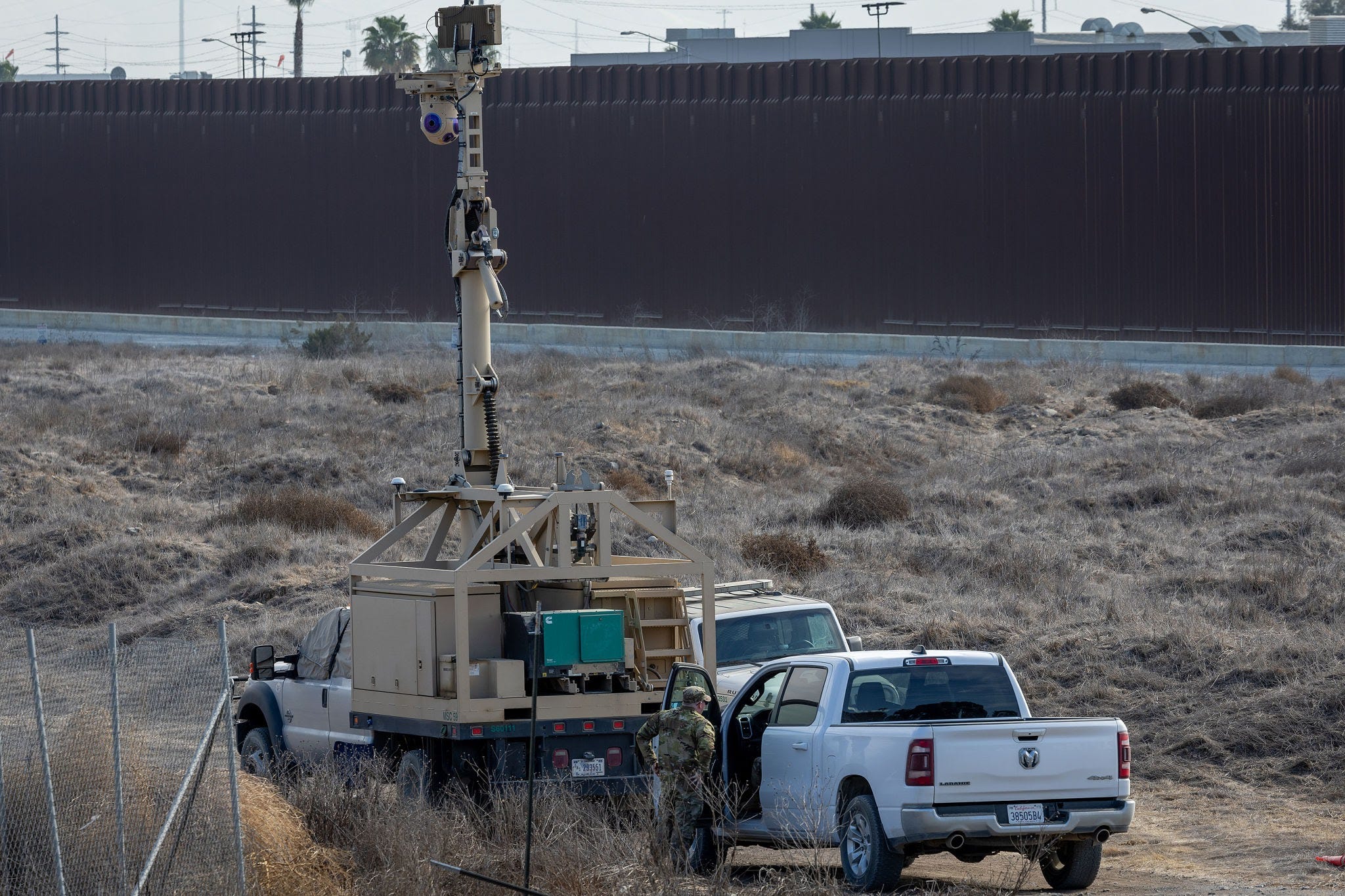
The U.S. Army is rapidly testing and deploying new counter-drone technology along the Mexican border in response to a dramatic escalation in the use of unmanned aerial vehicles by drug cartels.
Military officials have expressed growing alarm over the sophisticated ways criminal organizations are utilizing the technology. According to recent reports, the military detected 378 drone incursions along the southern border in just a 30-day period. The drones are frequently used by cartels for surveillance, smuggling operations, and monitoring the movements of U.S. Border Patrol and military personnel. In some instances south of the border, Mexican cartels have even weaponized drones to drop explosives on rivals and law enforcement.
To combat the rising threat, the U.S. military has begun fielding advanced countermeasures, moving systems from test ranges to real-world operations. Recently, the Army successfully used its AMP-HEL system—a powerful 20-kilowatt directed-energy laser weapon—to shoot down three cartel-linked drones over the Texas border, marking a significant milestone in defensive border operations.
The urgency of the situation has prompted U.S. military planners to look overseas for operational inspiration. Commanders at the Joint Task Force Southern Border have emphasized the need to emulate the rapid innovation seen in the ongoing conflict in Ukraine, where drone warfare has fundamentally transformed the modern battlefield.
“We tend to look at Ukraine and we say, ‘I am so impressed with how quickly they can adapt on a daily or weekly basis,’” Brigadier General Matt Ross recently told reporters regarding the military’s approach to the border crisis. “What we should really do is replicate that process.”
As approximately 8,000 U.S. troops continue to support border operations, the integration of these cutting-edge defensive systems highlights the evolving nature of border security and the continuous technological arms race between authorities and transnational criminal organizations.