

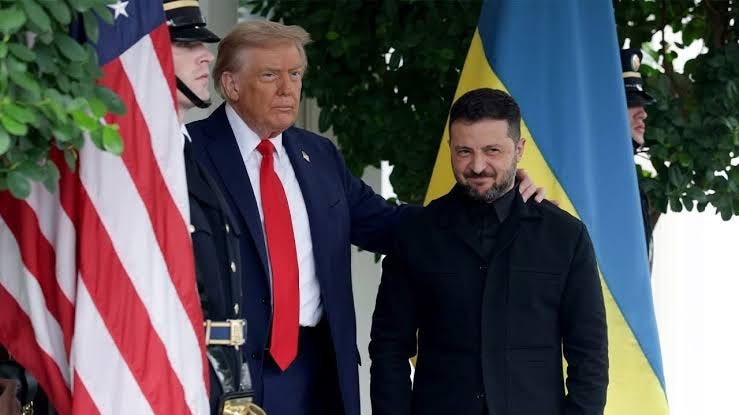
In a bid to reignite stalled peace talks, envoys for U.S. President Donald Trump recently urged Ukraine to halt its long-range drone strikes on Russian oil refineries, offering a controversial “diesel deal” as an economic incentive to soften Moscow.
According to a new Reuters report citing multiple sources, Trump’s Middle East envoy Steve Witkoff and son-in-law Jared Kushner met with a Ukrainian delegation in Miami on October 9. During the meeting, the U.S. representatives reportedly acknowledged that Russian President Vladimir Putin was not yet prepared to negotiate an end to the war. However, they suggested that allowing Russia to resume diesel exports could act as a catalyst for three-way talks.
One source familiar with the discussions described the diplomatic strategy to Reuters: “The idea was that the US could go back to Russia and say ‘See, the Ukrainians stopped striking and we gave you this deal. Now it’s your turn to do something.’”
The proposal required Kyiv to immediately halt its highly effective campaign against the Russian energy infrastructure that helps finance Moscow’s war effort. Kushner reportedly reiterated the request, noting it was a priority for the Trump administration.
While the Ukrainian delegation did not formally agree to the terms in Miami, they reportedly signaled a willingness to participate in a mutual “energy ceasefire” if Russia reciprocated the de-escalation. However, sources indicated that Kyiv viewed the U.S. approach skeptically, seeing it as an attempt to appease Putin with business concessions.
Just two days after the Miami meeting, President Trump unilaterally declared an “energy ceasefire.” While Ukrainian President Volodymyr Zelenskyy confirmed Kyiv’s readiness to comply if Russia followed suit, Moscow has yet to officially acknowledge or commit to the arrangement.
The diplomatic pressure campaign has raised concerns among European allies and some U.S. officials. While Reuters sources noted the envoys did not explicitly threaten to cut off military support during the Miami meeting, a separate Ukrainian official told Axios that the Trump administration warned it could sever U.S. intelligence sharing if the refinery strikes continued. Furthermore, the Financial Times reported that U.S. officials informed European allies that Trump might block NATO’s PURL mechanism—which uses European funds to purchase U.S. weapons for Ukraine—unless Kyiv backed down.
Despite the U.S. concessions, the Kremlin’s stance appears unchanged. A source close to the Kremlin told Reuters that Putin will only return to the negotiating table once he secures “the remaining 11% of Donbas”—a territorial demand Kyiv adamantly refuses to entertain. Meanwhile, Russian Deputy Prime Minister Aleksandr Novak recently boasted that Russia’s diesel exports could reach 3.0 to 3.5 million tons a month by the end of the year, exceeding the volumes outlined in Trump’s announced deal.