

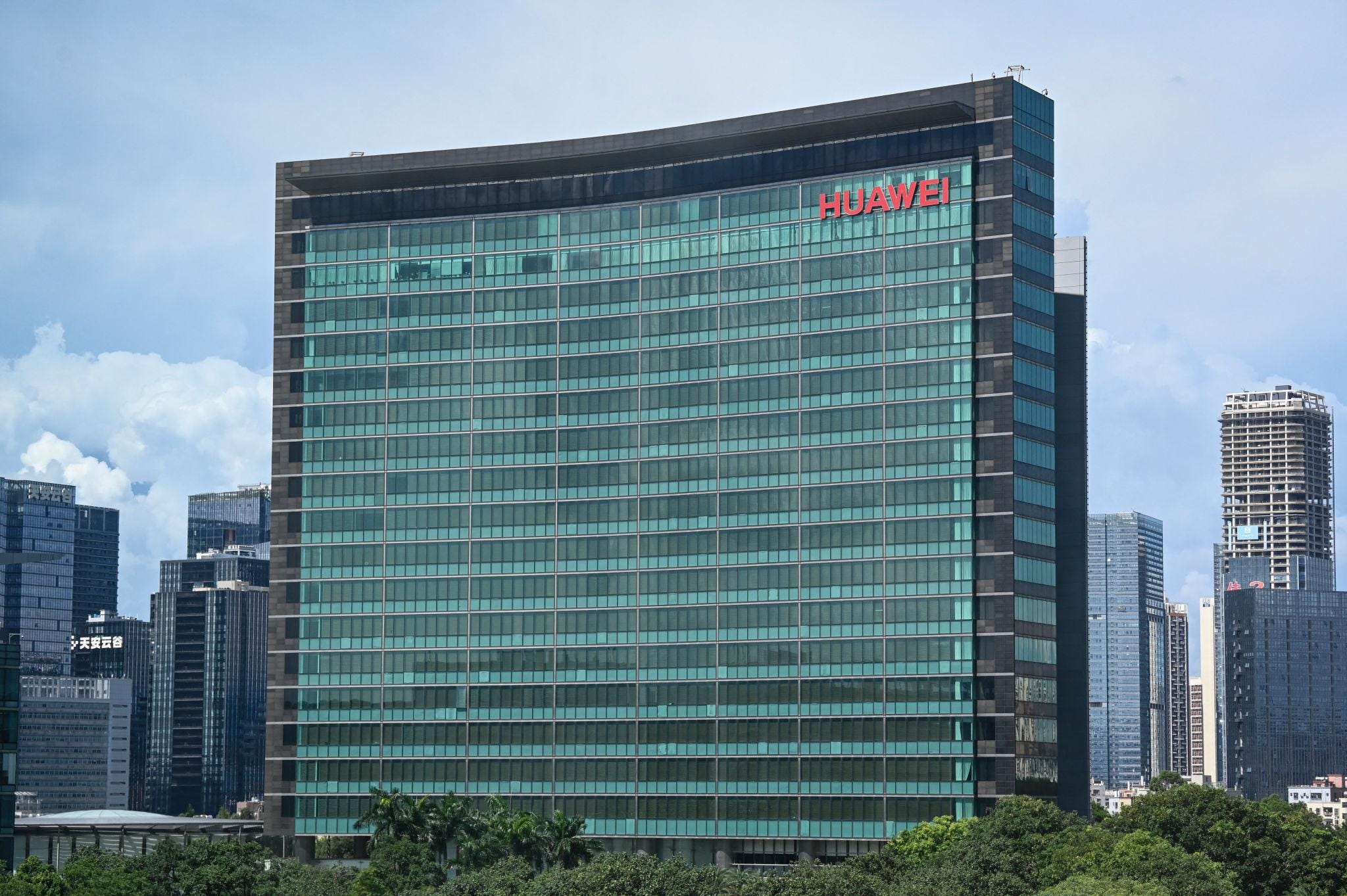
The U.S. government’s long-running criminal case against Chinese telecommunications giant Huawei has reached a critical stage, with federal prosecutors presenting their final arguments in a trial that could have significant implications for American technology companies and U.S.-China relations.
During approximately six hours of closing arguments in federal court in Brooklyn, New York, prosecutors portrayed Huawei as a company that allegedly engaged in systematic criminal conduct to expand its global telecommunications business and protect its competitive position.
The government alleges that Huawei and three affiliated companies participated in a pattern of racketeering, conspired to steal trade secrets from American technology companies and deceived major financial institutions about business operations in Iran.
The case, which began with an investigation dating back to 2018, has become one of the most consequential legal confrontations between Washington and a major Chinese technology company.
Prosecutors Allege a Pattern of Corporate Misconduct
Federal prosecutors argue that Huawei pursued business growth through activities that went beyond aggressive commercial competition.
The indictment includes allegations of bank fraud, wire fraud, obstruction of justice, conspiracy to steal trade secrets and racketeering.
Among the most significant allegations are claims that Huawei sought to obtain proprietary technology from five American companies, including valuable technical information that could provide an advantage in telecommunications equipment development.
Prosecutors have pointed to alleged efforts involving Cisco’s router operating system source code and a robotic arm used by T-Mobile to test mobile phones.
The government argues that these incidents were not isolated business disputes but part of a broader pattern of conduct intended to strengthen Huawei’s position in the global telecommunications market.
Huawei has rejected the accusations and pleaded not guilty.
Iran Business Dealings at the Center of Bank Fraud Allegations
Another major component of the case involves Huawei’s business activities in Iran and its communications with international financial institutions.
Prosecutors allege that Huawei misrepresented its relationship with Skycom, a Hong Kong-based company that conducted business in Iran, misleading HSBC and other banks about the nature of its operations.
According to the government, the alleged misrepresentations enabled financial transactions involving Iran to move through the international banking system despite U.S. sanctions restrictions.
The allegations also connect the case to Huawei Chief Financial Officer Meng Wanzhou, whose 2018 arrest in Canada triggered a major diplomatic dispute involving the United States, China and Canada.
Meng later entered a deferred prosecution agreement in 2021, acknowledging certain statements about Huawei’s business in Iran and its compliance representations to a financial institution. The charges against her were subsequently dismissed in 2022.
A U.S. judge ruled in June 2026 that her admissions could be introduced as evidence in the company’s criminal trial.
Huawei Rejects the Government’s Narrative
Huawei’s defense team has offered a sharply different interpretation of the evidence.
During closing arguments on November 17, defense attorney Brian Heberlig told jurors that prosecutors had distorted ordinary business activities and attempted to transform individual incidents into evidence of a coordinated criminal conspiracy.
He argued that the government had failed to establish the charges beyond a reasonable doubt.
The defense also challenged the bank fraud allegations, arguing that financial institutions were aware of Huawei’s business connections in Iran and had made their own commercial decisions about the risks involved.
Regarding the trade-secret accusations, Huawei maintained that prosecutors had selectively highlighted individual incidents while overlooking the company’s broader business practices and responses to employee misconduct.
The company insists that its international success came through legitimate innovation and commercial competition, not criminal activity.
A Case With Major Implications for U.S.-China Relations
The Huawei prosecution extends beyond the company’s commercial activities. It reflects broader American concerns about China’s growing influence in telecommunications infrastructure, advanced technology and global digital networks.
Washington has repeatedly argued that protecting American intellectual property and preventing sensitive technology from reaching strategic competitors are essential national security priorities.
Huawei has faced significant restrictions in the United States since 2019, including limitations on access to American technology and equipment. The company has consistently denied posing a national security threat.
The criminal proceedings also come amid intensifying competition between Washington and Beijing over semiconductors, artificial intelligence, telecommunications infrastructure and next-generation wireless networks.
What Happens Next?
With closing arguments completed, the case moves toward the jury’s deliberations and eventual decision.
Huawei and three affiliated companies face 12 remaining criminal counts. A guilty verdict could expose the companies to significant criminal penalties and further complicate their international business operations.
An acquittal, meanwhile, would represent a major setback for federal prosecutors after years of investigations and litigation.
Regardless of the outcome, the trial represents an important test of how aggressively the United States can pursue foreign technology companies over alleged corporate misconduct involving American intellectual property and the U.S. financial system.
For Washington, the case is about more than one telecommunications company. It is also about protecting American innovation, enforcing sanctions and maintaining U.S. competitiveness in an increasingly contested global technology market.