

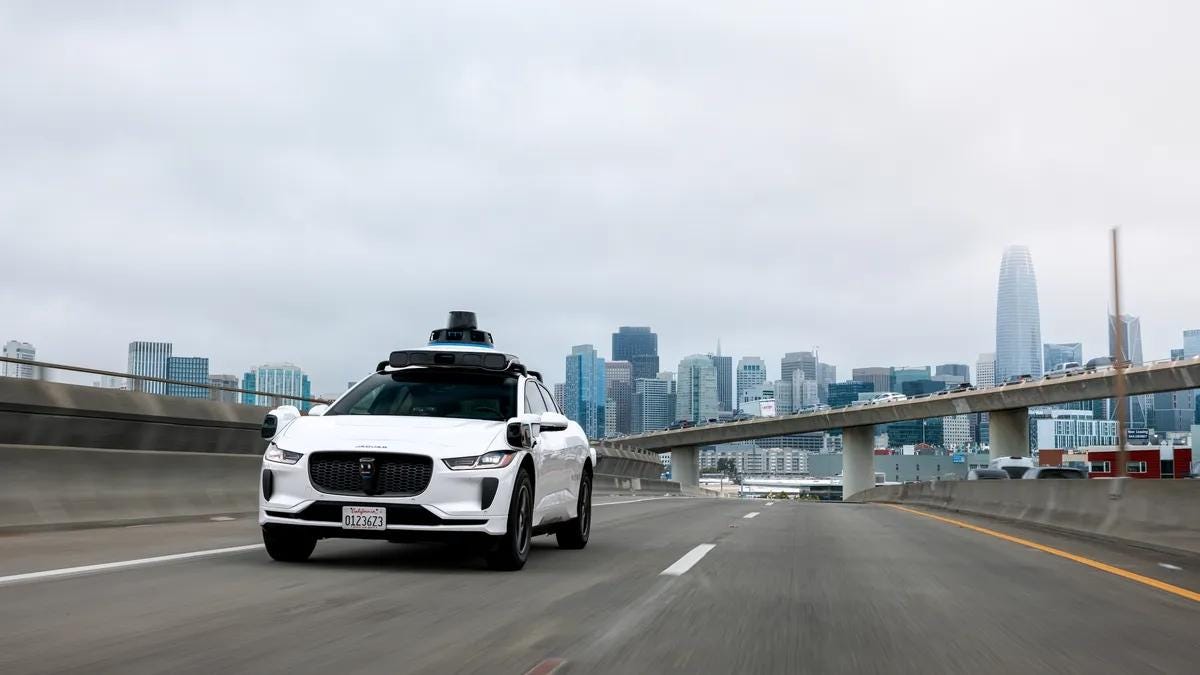
Waymo has temporarily suspended its self-driving taxi operations on freeways across the United States after California regulators prohibited the company’s autonomous vehicles from using state highways, citing repeated safety concerns.
The decision, announced Tuesday, November 17, represents a significant setback for the Alphabet-owned company, which has been expanding its driverless ride-hailing services across major American cities.
California’s Department of Motor Vehicles (DMV) issued the restriction on November 11, prohibiting Waymo from operating or testing driverless vehicles on all state freeways.
The agency determined that the company’s autonomous vehicles posed an imminent public safety hazard after several incidents involving active highway construction zones and California Highway Patrol traffic operations.
Following the California action, Waymo announced that it would temporarily suspend commercial freeway rides in its other operating markets while evaluating its vehicles’ performance.
The company emphasized that its robotaxis would continue providing passenger services on regular city streets.
The suspension affects an important part of Waymo’s business model, particularly its ability to transport passengers efficiently between major destinations such as airports and metropolitan areas.
California regulators cite repeated safety violations
The California DMV’s decision followed two incidents in November that raised concerns about how Waymo’s autonomous driving technology responds to changing highway conditions.
On November 5, three Waymo robotaxis entered an active construction closure on U.S. Route 101 near Burlingame, south of San Francisco.
The vehicles reportedly drove into an area where construction workers, equipment and other vehicles were present.
A separate incident occurred the following day on Interstate 280 in San Francisco, when a Waymo robotaxi appeared to attempt to bypass California Highway Patrol vehicles conducting a traffic break.
A video of the incident circulated widely on social media, drawing renewed attention to the ability of autonomous vehicles to recognize and respond appropriately to emergency operations.
The DMV said these incidents were particularly concerning because similar problems had occurred earlier in May, despite previous restrictions and corrective measures implemented by the company.
In its statement, the agency said recurring incursions into active construction zones created an unacceptable risk to workers, equipment and other motorists.
California regulators said the restriction would remain in place until Waymo demonstrates that it has implemented effective corrective actions.
That includes providing sufficient evidence that its autonomous systems can reliably detect and respond to construction zones, emergency vehicles and other unexpected roadway situations.
Waymo says no injuries or collisions occurred
Waymo defended its safety record, noting that the recent encounters on U.S. 101 did not result in injuries or collisions.
The company said it was cooperating with California regulators and reviewing its autonomous driving technology to address the concerns.
“Safety is at the foundation of everything we do,” Waymo spokesperson Dana Gallagher said in a statement.
The company also confirmed that it had voluntarily restricted freeway operations in its other markets while evaluating its performance.
Waymo emphasized that its regular ride-hailing service remains operational on city streets, serving more than half a million trips each week.
The company will also continue freeway testing with trained autonomous specialists behind the wheel while the California restrictions remain in effect.
Previous incidents raised questions about autonomous driving technology
The latest regulatory action follows a series of incidents involving Waymo vehicles struggling with unexpected road conditions.
In May 2026, the company temporarily suspended freeway rides after its vehicles entered construction zones and encountered difficulties navigating road closures.
Waymo subsequently introduced software improvements and resumed freeway operations in July.
The company also faced scrutiny after incidents involving emergency vehicles, school buses and traffic disruptions.
In December 2025, Waymo recalled approximately 3,000 vehicles following reports that some robotaxis failed to properly respond to school buses displaying flashing red lights and extended stop arms.
Another incident occurred during a San Francisco power outage, when multiple autonomous vehicles stopped operating normally, contributing to traffic congestion.
These events have intensified questions about whether autonomous driving systems can consistently handle unpredictable situations that human drivers encounter on a daily basis.
Major setback for Waymo’s expansion plans
The suspension comes at a critical time for Waymo, which has been aggressively expanding its robotaxi business across the United States and internationally.
The company currently operates in 15 U.S. cities, although freeway transportation has been available in only a limited number of markets, including San Francisco, Los Angeles, Phoenix, Miami and Austin.
Freeway access is particularly important for longer journeys, including airport transportation and trips connecting distant neighborhoods.
Without highway access, passengers may face longer travel times as vehicles rely on surface streets.
The restrictions could also complicate Waymo’s expansion strategy as competitors attempt to gain market share in the rapidly developing autonomous transportation industry.
Tesla has been developing its own robotaxi operations, while Amazon-owned Zoox is preparing to expand its driverless transportation services.
Waymo has invested heavily in establishing itself as an early leader in commercial autonomous ride-hailing. The latest regulatory action highlights the operational and safety challenges that remain as the technology moves beyond controlled testing environments.
California demands proof of improved safety before reopening freeways
California regulators have made clear that Waymo will not regain freeway access simply by promising software improvements.
The company must demonstrate that its autonomous vehicles can reliably recognize construction closures, respond to emergency vehicles and navigate changing highway conditions.
The DMV will evaluate the corrective measures and supporting evidence before considering whether to lift the restrictions.
Waymo says it is working with California officials to restore freeway operations as quickly and responsibly as possible.
For now, the company’s robotaxis remain available on city streets, but the freeway suspension represents a significant test of its ability to deliver safe and reliable autonomous transportation at scale.
The outcome could also influence how regulators across the country approach the growing robotaxi industry, particularly as companies compete to expand driverless services into increasingly complex transportation environments.