

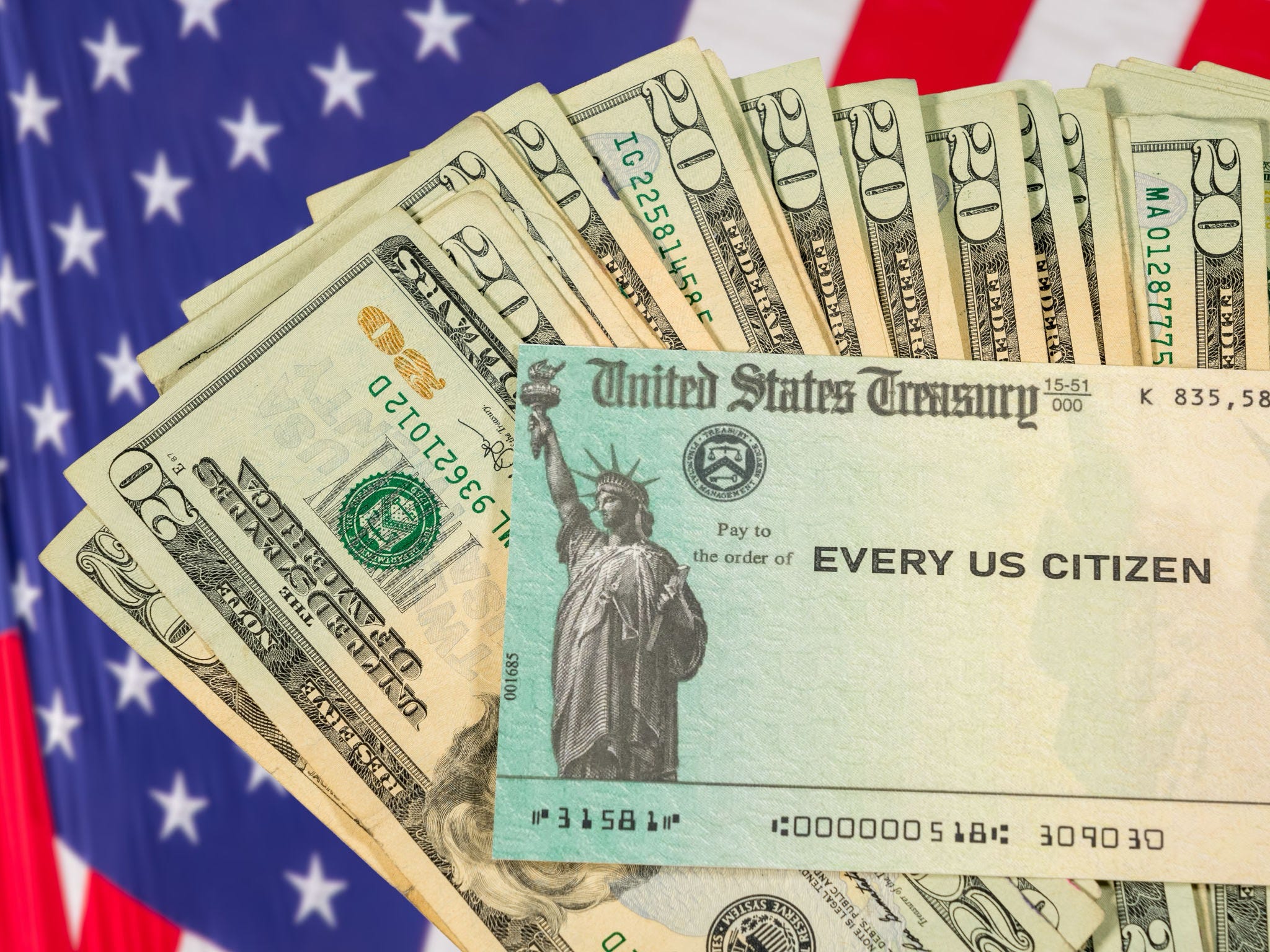
The Trump administration is attempting to clarify how it plans to fund the president’s latest campaign promise—a $5,000 dividend check for every American adult, contingent on Republicans maintaining control of Congress in the upcoming midterm elections.
Despite estimates that the nationwide payouts would cost roughly $1.2 trillion, administration officials insist the money will not add to the national deficit or come out of everyday taxpayers’ pockets.
“Together we’re going to deliver that plan and we’re going to pay that money to the Americans, and not from taxpayer money,” Howard Lutnick, a key Trump ally and administration official, said in a recent interview with NBC News. Lutnick claimed the administration could “earn the money that Donald Trump wants to pay out, not from the deficit and not from taxpayers.”
The “Trump Platinum Card” and Tariffs
When pressed on where the massive influx of cash would originate, Lutnick pointed to several unconventional revenue streams. One major source would be the proposed “Trump Platinum Card,” an unreleased immigration program that would allow wealthy foreign nationals to live in the U.S. for up to 270 days a year without paying taxes on non-U.S. income.
According to Lutnick, applicants would be required to pay a $15,000 processing fee, pass a Department of Homeland Security background check, and make a staggering $5 million contribution to the U.S. government to be guaranteed citizenship.
“We have a waitlist of more than 100,000 people who want to come,” Lutnick stated, doing the math to claim that the program alone would generate “$500 billion dollars.” Lutnick also pointed to the valuation of Trump Media stock, noting the company was “up $50 billion.”
Meanwhile, Vice President JD Vance and President Trump himself have continuously pointed to tariffs as the primary funding mechanism. However, economists remain highly skeptical. The Tax Foundation recently warned that current U.S. tariff revenues—which generate a mere fraction of the needed $1.2 trillion annually—would fall woefully short, meaning the government would almost certainly need to issue new debt to cover the checks.
Economic and Legal Questions
The proposal has drawn sharp criticism from political opponents and ethics watchdogs, who have characterized the explicitly conditional $5,000 promise as a desperate attempt to buy votes ahead of a tightly contested midterm election.
Beyond the ethical concerns, lawmakers have questioned the legality and logistics of the plan. Any such distribution would require congressional approval, and dumping $1.2 trillion into the economy could reignite the very inflation the administration has fought to cool. White House National Economic Council Director Kevin Hassett suggested Friday that the funds could potentially be moved through a budget reconciliation package—but only if the GOP successfully sweeps the November elections.