

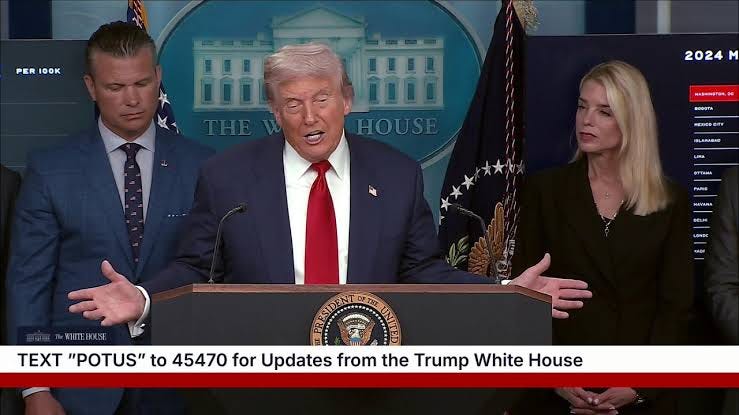
The White House is aggressively defending a taxpayer-funded television advertising campaign that promotes President Donald Trump just weeks ahead of the 2026 midterm elections.
The 30-second spot, which is set to the song “Love Me” by the artist JMSN, features rapid-fire clips of Trump from his second term [cite: 1.1.2]. In a voiceover, the president declares, “Together, we will defeat communism, socialism and Marxism in America” [cite: 1.1.2]. On-screen text additionally touts the administration’s political achievements, displaying slogans like “Largest tax cuts in history” and “Reigniting American manufacturing”.
At the end of the commercial, a disclaimer notes that the spot was “Paid for by the U.S. Government”.
According to the political advertising tracking firm AdImpact, the administration has spent over $440,000 to broadcast the campaign during prime-time slots and morning programs on CBS, Fox News, and Newsmax in major media markets.
‘Patriotism is Not Partisan’
The television campaign has drawn immediate and fierce pushback from Democratic lawmakers, who accuse the administration of using public funds for illegal campaign propaganda.
Rep. Jamie Raskin (D-Md.) suggested the ads could constitute felony criminal theft of government property [cite: 1.3.1]. “It is a Hatch Act violation for any government employees who worked on it or used government resources to make it,” Raskin wrote, arguing the messaging is explicitly aimed at influencing the upcoming elections.
The White House, however, categorically rejected those claims.
In a statement responding to the criticism, the administration characterized the campaign as an “unapologetically American” public service announcement [cite: 1.3.1]. Officials argued that because Trump himself is not on the ballot and the ad contains no direct call to action to vote for a specific candidate, it does not violate election laws.
“Patriotism is not partisan,” the White House stated, adding that the advertisements are simply intended “to remind Americans why they should love and defend their country—at home, at the border, and abroad” [cite: 1.1.1]. The administration also pointed to previous presidents who used government-funded campaigns to promote national initiatives, citing President Joe Biden’s 2021 “We can do this” COVID-19 vaccination drive as a precedent.
Critics, however, note a stark difference between public health messaging and the heavily partisan rhetoric featured in the current ads, especially as Trump has spent recent weeks urging his supporters to “pretend like I’m on the ballot” this November.